
19 min read ·
Which Used Ford F-150s Deserve a Place on Your Shortlist?
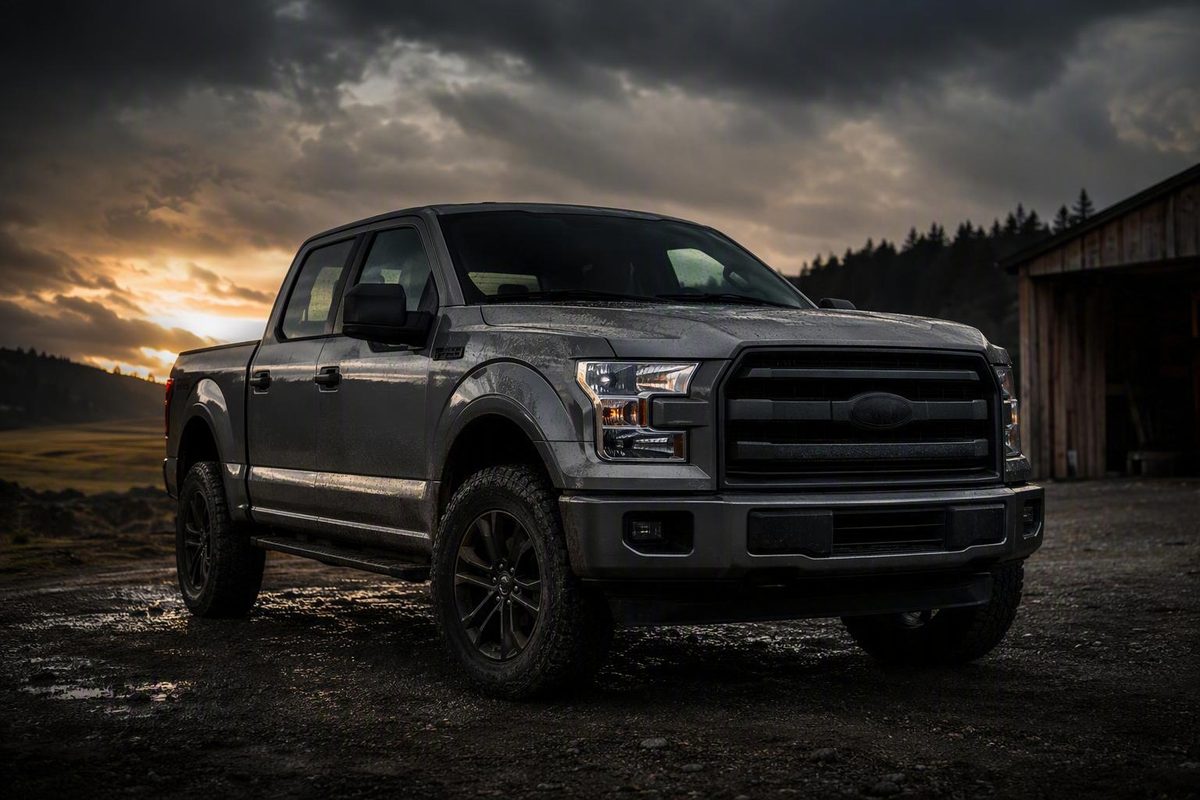
There is no universally “best” Ford F-150 year. The right used truck depends on its engine, transmission, drivetrain, maintenance, prior towing or fleet use, corrosion, accident history, and present mechanical condition.
The available commercial buying guides nevertheless suggest a practical starting point. The 2014 F-150 receives the broadest support as an older candidate, while 2019–2020 stand out for shoppers seeking newer features. The 2011–2012 trucks are recurring lower-budget possibilities. The strongest warnings concern 2004–2006 and 2013, while 2018 remains disputed.
That conclusion is deliberately narrow. It synthesizes recommendations from Ford dealerships, a vehicle marketplace, and automotive-accessory retailers. These publishers do not disclose normalized failure rates, warranty-claim data, or a reproducible model-year scoring method. Their overlap can help shoppers decide where to begin, but it cannot prove that one year is more reliable than every other year.
The short answer: the best F-150 years to investigate first
A confidence-tier shortlist is more useful than ranking model years from first to tenth as though every F-150 from a given year were mechanically identical.
| Confidence tier | Model years | Why investigate them | Main qualification |
|---|---|---|---|
| Strongest starting candidate | 2014 | Receives broad support as a late-generation, older used-truck choice | Condition, configuration, records, rust, and prior use still decide whether an individual truck is worth buying |
| Conditional modern choices | 2019–2020 | Favored for their balance of later-generation features and capability | Evaluate the exact powertrain and pay close attention to transmission operation |
| Conditional budget choices | 2011–2012 | Repeatedly included among affordable older candidates | The sources conflict about 2011, making truck-specific inspection especially important |
| Disputed | 2018 | Recommended by some publishers but criticized by another, which makes an exception for the 2.7L EcoBoost | Judge the engine-and-transmission pairing rather than the year alone |
| High caution | 2004–2006, 2013 | Receive the most consistent recurring warnings in the source set | Do not assume every example is defective, but demand stronger documentation and inspection evidence |
Ford of Waynesville highlights 2014 as one of the better used choices from the 2009–2014 generation. It also calls attention to 2009, 2012, 2015, and 2018, illustrating why 2014 should be treated as the strongest starting point rather than an undisputed winner. Ford of Waynesville explains its recommended years and commercial buying perspective.
Municibid recommends 2011, 2012, 2014, and 2018–2020, while warning about 2004–2006, 2013, 2016, and 2017. Its recommendations reinforce the broad shortlist but remain publisher judgments rather than sales-adjusted reliability findings. Municibid sets out its recommended and caution years.
The configuration-level pattern is narrower. Camera Source identifies the 2014 5.0L V8 and 2019–2020 2.7L EcoBoost as its principal value recommendations. It also treats the 2018 2.7L EcoBoost more favorably than most other 2018 configurations. Those are attributed commercial recommendations—not proof that either engine is conclusively the most reliable choice. Camera Source details its preferred model-year and engine combinations.
The practical shortlist is therefore:
- Investigate 2014 first if you want an older truck and place more weight on purchase value than on the newest cabin technology.
- Compare 2011–2012 trucks if the purchase budget is tighter and you can find an example with strong records.
- Consider 2019–2020 if modern equipment matters, but examine transmission behavior and powertrain history closely.
- Treat 2018 as configuration-dependent.
- Apply the highest level of caution to 2004–2006 and 2013.
Why a model-year ranking is only the beginning
“2014 F-150” is not a complete vehicle specification. Within one model year, trucks can differ by engine, transmission, two- or four-wheel drive, cab, bed, axle ratio, trim, towing equipment, payload package, and production date. Those differences can change capability, maintenance needs, and exposure to configuration-specific concerns.
Mileage is similarly incomplete. A higher-mileage truck with consistent maintenance and detailed invoices may be a better candidate than a low-mileage example that spent years towing heavily, plowing snow, idling on job sites, or receiving intermittent service.
Other factors can overwhelm a favorable model-year reputation:
- Deferred maintenance
- Collision or flood damage
- Road-salt corrosion
- Performance tuning
- Suspension lifts or oversized tires
- Poorly installed electrical accessories
- Frequent towing or hauling
- Long periods of disuse
- Unresolved warning lights or drivability complaints
The evidence behind online “best F-150 years” lists also needs context. The guides used here come from sellers, dealerships, marketplaces, and accessory retailers with commercial interests. They generally do not explain how recommendations were weighted or provide a dataset that allows readers to reproduce the rankings.
Raw complaint totals, when quoted by such guides, are not failure rates. A popular model year can generate more complaints because more trucks were sold. Older trucks have had more years and miles in which faults can appear. Owner reporting also varies. Without adjusting for exposure, configuration, age, and mileage, totals cannot establish the probability that a particular truck will fail.
The number of campaigns attached to a model year does not show whether a particular VIN is included, whether the repair applies to its equipment, or whether the work has already been completed. Resolve recall status for the individual VIN rather than relying on a year-level count.
Use the year only to create a shortlist. Then evaluate each truck in this order:
- Configuration: Confirm the engine, transmission, drivetrain, axle, cab, bed, and relevant packages.
- History: Review service invoices, ownership, title status, accident records, prior use, and VIN-specific recall information.
- Diagnostics: Obtain a capable scan covering more than the engine computer.
- Road behavior: Test cold starting, shifting, braking, steering, vibration, cooling, and driveline operation.
- Independent inspection: Use a technician familiar with Ford trucks and the candidate’s powertrain.
A recommended year can still contain a poor truck. A disputed year can still produce a sound purchase when its configuration, history, inspection, and price all make sense.
2014: the clearest value-and-reliability candidate
The 2014 F-150 is the most defensible first search among the years covered by the supplied guides. It concluded the 2009–2014 generation, and multiple publishers portray it as a mature late-generation truck. The generation dates and late-cycle positioning are described in the dealer guides, but “late generation” should not be mistaken for proof of mechanical reliability.
The phrase value candidate also needs qualification. Here, it means that commercial publishers repeatedly present 2014 as an appealing older used choice. It does not mean that market prices, repair frequency, depreciation, or total ownership costs have been independently analyzed.
The 2014 5.0L V8 receives the clearest configuration-specific support. Ford of Waynesville speaks favorably about the available V8, while Camera Source names the 2014 5.0L as one of its preferred used combinations. That overlap makes it sensible to investigate, but it does not establish that every 5.0L truck is reliable or that the engine is superior in every use case.
Start by seeing the truck with a genuinely cold engine. Before startup, check whether the engine and hood are cool rather than relying only on the seller’s statement. Observe:
- Whether the engine starts promptly
- Persistent rattling, knocking, grinding, or irregular ticking
- Smoke or unusual exhaust
- Rough idle or misfires
- Warning lights or messages
- Fluid leaks
- Cooling behavior as the truck warms
Drive the truck long enough to experience low-speed shifts, moderate acceleration, steady cruising, deceleration, turns, hills if available, and repeated stops. Pay attention to delayed engagement after selecting Drive or Reverse, harsh or inconsistent shifts, vibration under load, driveline clunks, steering looseness, brake pulsation, and rising temperature.
Records should show more than occasional oil changes. Ask for invoices documenting fluid maintenance, ignition work, cooling-system repairs, transmission complaints, and significant engine work. Repeated visits for the same symptom may matter more than a single completed repair.
Look for evidence of hard use. A heavily worn hitch receiver, altered trailer wiring, sagging suspension, damaged bed, unusually worn driveline components, or commercial accessories can indicate a demanding work history. None is automatically disqualifying, but each should shape the inspection and price decision.
Corrosion can outweigh a favorable powertrain recommendation. Inspect the frame, crossmembers, suspension and body mounting points, brake and fuel lines, bed supports, cab corners, body seams, and spare-tire area. A clean exterior does not establish that the structure and underbody are sound.
For shoppers seeking an older, comparatively straightforward truck, 2014 belongs at the front of the search. The objective is not to buy any 2014; it is to find a well-documented example whose diagnostics, road behavior, corrosion condition, and independent inspection support the asking price.
2011-2012 and 2019-2020: the best alternatives for different budgets
The 2011 and 2012 trucks appear repeatedly in favorable commercial lists, but they should not be treated as uniformly trouble-free. Their age makes maintenance, corrosion, and prior use especially important. A lower advertised price also leaves more room for age-related wear that may not be obvious during a short viewing.
The evidence conflict around 2011 is significant. Municibid recommends it, while RealTruck places it on an avoid list and associates that period with concerns including leaks, ignition faults, and unexpected transmission behavior. Neither publisher provides configuration-specific failure rates, so the disagreement cannot be resolved by counting endorsements. RealTruck’s guide demonstrates the conflicting assessment of 2011.
The 5.0L V8 returned to the F-150 for the 2011 model year, with availability depending on trim and package, according to J.C. Lewis Ford Pooler. The same guide identifies 2009–2014 as the 12th generation, 2015–2020 as the 13th, and 2021 as the beginning of the 14th generation. J.C. Lewis outlines the generation and powertrain timeline.
Those facts help define what a buyer is comparing, but they do not settle reliability. A documented 2011 or 2012 that starts cleanly, shifts predictably, scans well, and has manageable corrosion may be preferable to a neglected 2014. Conversely, a cheaper truck with incomplete records and active symptoms can become poor value quickly.
The 2019 and 2020 models are the leading modern-balance candidates in the commercial source set. They are favored for combining later-generation equipment with comparatively positive year-level treatment. The recurring configuration recommendation is the 2019–2020 2.7L EcoBoost, although that remains a publisher assessment rather than an independently established reliability result.
For a turbocharged engine, inspection should emphasize consistent power delivery, smoke, leaks, cooling behavior, abnormal noises, warning lights, and oil-service history. A smooth idle alone does not show how the engine behaves under load.
Transmission scrutiny is equally important. Favorable overall treatment of 2019–2020 coexists with commercial-source reports of continuing 10-speed complaints. During the drive, test:
- Engagement from Park into Reverse and Drive
- Light-throttle shifts in stop-and-go traffic
- Moderate acceleration
- Highway cruising
- Deceleration and reacceleration
- Operation when cold and fully warm
Watch for delayed engagement, harsh shifts, repeated gear hunting, engine-speed flares without matching acceleration, shudder, vibration, or powertrain warnings.
Arrange a capable diagnostic scan even if the dashboard is clear.
Ask whether the transmission has received software updates, internal repair, valve-body work, or replacement. Treat verbal assurances as leads to verify, not as substitutes for invoices.
The budget comparison is straightforward:
- Investigate 2011–2012 when purchase price is the priority.
- Use 2014 as the clearest older consensus candidate.
- Consider 2019–2020 for newer equipment, with added scrutiny of the exact engine and transmission.
The disputed years: 2009, 2010, 2015, 2017, and especially 2018
Commercial guides often disagree because a model year includes numerous powertrain and equipment combinations. Publishers may also weigh price, technology, owner complaints, recalls, capability, and anecdotal reputation differently without disclosing how those factors affect the final verdict.
2009 and 2010: The 2009 model begins the 2009–2014 generation and appears as a positive pick in several guides. It is a legitimate candidate, but it does not receive the same overall emphasis as 2014.
The 2010 verdict is more divided. Ford of Waynesville calls it an honorable mention for budget shoppers, while RealTruck and Camera Source advise avoiding it. That range does not support a categorical verdict. A 2010 should have to distinguish itself through documentation, condition, clean diagnostics, predictable operation, and an appropriate price.
2015 and 2017: The 2015 F-150 introduced a major redesign with aluminum body panels over a steel frame.
Aluminum exterior panels do not eliminate corrosion concerns. The steel frame, mounting points, lines, brackets, fasteners, and suspension components still require examination.
The 2017 model is similarly mixed. RealTruck recommends it, while Municibid and Camera Source place it in a caution group. J.C. Lewis says the 10-speed automatic began appearing with certain engines for the 2017 model year and later expanded across the lineup. Consequently, “2017 F-150” does not by itself establish which transmission a truck has.
Confirm the powertrain through equipment information, labels, service records, and physical verification. Then investigate production details, software history, transmission repairs, stored faults, and operation at different temperatures.
2018: This year receives the sharpest disagreement. Ford of Waynesville and Municibid include it among their positive choices, while Camera Source advises against most 2018 configurations but treats the 2.7L EcoBoost as a relative exception. The disagreement is explicit in Camera Source’s configuration-level discussion, which also acknowledges continued transmission concerns. Camera Source explains its qualified exception for the 2018 2.7L EcoBoost.
The appropriate verdict is therefore: 2018 is disputed and configuration-dependent.
Before becoming invested in the trim, color, or price, identify the engine and transmission. Request documentation for software updates, drivability complaints, warranty work, and powertrain repairs. Scan the available modules and drive the truck from cold through full operating temperature. A short, already-warm demonstration drive is not enough to evaluate intermittent behavior.
The 2.7L EcoBoost deserves investigation because one commercial guide favors it relative to other 2018 combinations—not because its reliability has been conclusively established. The individual truck’s records and condition should outweigh the generic year-level recommendation.
F-150 years that deserve the most caution
The strongest recurring warnings apply to 2004–2006 and 2013. “High caution” does not mean every example must be rejected. It means buyers should require more convincing records, more targeted inspection, and a larger margin for uncertainty.
For 2004–2006, commercial guides repeatedly associate some trucks—particularly those equipped with the 5.4L Triton V8—with spark-plug, ignition, coil, cam-phaser, fuel-system, and broader engine concerns. Municibid also describes reported misfires and transmission issues for this period. These are reported problem associations, not measured probabilities. Municibid summarizes the concerns it associates with 2004–2006 trucks.
For a 2004–2006 candidate, ask for itemized engine-service invoices. Specifically investigate:
- Previous spark-plug work
- Ignition-coil replacement
- Cam-phaser or timing-related repair
- Fuel-system work
- Oil-pressure concerns
- Cooling-system maintenance
- Previous misfire diagnosis
- Transmission complaints or repair
At cold start, listen for persistent rattling and assess idle quality. Under load, watch for hesitation, misfires, flashing warning lights, smoke, or loss of power. Inspect for oil and coolant leaks and for signs of neglected maintenance. A seller’s claim that a major repair was completed is not equivalent to an invoice identifying the work, date, and mileage.
Commercial guides repeatedly associate 2013 with rough or unexpected transmission behavior. Some also flag timing-chain-related complaints on certain 3.5L EcoBoost trucks. RealTruck includes 2013 on its avoid list and discusses unexpected downshift concerns, but its article does not supply direct campaign documentation or failure-rate data. RealTruck describes the problems it associates with 2013.
A serious 2013 evaluation should include:
- A VIN-specific recall-status check
- Documentation for applicable completed repairs
- A true cold start
- An extended drive across different speeds and loads
- A capable module scan
- Independent engine and transmission assessment
During the drive, note unexpected downshifts, slipping, engine-speed flare, harsh engagement, hesitation, or inconsistent timing. For a 3.5L EcoBoost candidate, ask for oil-service records and documentation related to startup noise, timing components, or prior drivability complaints.
Other years appearing on at least some caution lists include 2010 and 2015–2018. The guides do not agree consistently enough to treat all of them as universal exclusions. Their mixed reputations justify configuration-specific research, not automatic rejection.
Price should be evaluated against exposure. A discount tied to unresolved engine or transmission behavior may disappear as soon as diagnosis and repair begin. When the truck’s history is uncertain or the seller resists inspection, preserve the option to walk away.
Choose by engine, transmission, and intended use—not the badge alone
The best candidate for occasional home-project hauling may not be the right truck for frequent towing, commercial work, long highway trips, or a buyer prioritizing newer convenience features.
| Buyer priority | Candidate years | Configurations to investigate | Main cautions | What to verify |
|---|---|---|---|---|
| Traditional older-truck value | 2014 | 5.0L V8, as favored by commercial guides | Reputation cannot overcome neglect, rust, leaks, or poor shifting | Cold start, invoices, scan results, transmission operation, corrosion |
| Lower purchase budget | 2011–2012 | Well-documented trucks, including available 5.0L examples | Conflicting treatment of 2011; age-related wear | Exact powertrain, prior use, fluids, codes, rust, inspection |
| Modern features and efficiency | 2019–2020 | 2.7L EcoBoost as a recurring commercial-source pick | Reported 10-speed concerns; turbocharged-engine condition matters | Engagement, shifting, gear hunting, leaks, smoke, software and repair history |
| Considering a 2018 | 2018 | 2.7L EcoBoost receives relative support from one source | Year remains disputed overall | Powertrain pairing, service history, module scan, long test drive |
| Newer technology | 2021 and newer | Compare conventional and hybrid powertrains according to actual use | Long-term evidence is less mature | Warranty and recall status, service history, electronics, payload and towing configuration |
The 2021 model year began another generation with newer technology and hybrid availability, according to the J.C. Lewis dealer guide. That same source says the 2015 redesign introduced an aluminum body while retaining a steel frame and that towing maximums vary by generation and configuration. Its published maximums should not be applied to every truck from a model year. J.C. Lewis discusses body construction, later powertrains, and configuration-dependent capability.
Long-term evidence for 2021-and-newer trucks is less mature simply because they have had less time to accumulate age and use than older generations. The available evidence does not justify endorsing or rejecting every hybrid F-150.
Towing suitability must be determined for the individual truck. Engine, drivetrain, cab, bed, axle ratio, payload package, factory towing equipment, passengers, cargo, accessories, and hitch load can all affect whether a particular combination is appropriate.
Before buying for trailer duty, verify:
- The certification and payload labels on the truck
- Engine, drivetrain, and axle information
- Factory towing equipment
- Configuration-specific documentation
- Expected passengers and cargo
- Hitch and accessory weight
- The trailer’s actual loaded weight and tongue or pin weight
Do not infer capability from an installed receiver or brake controller. If safe loading cannot be confirmed from truck-specific information, consult a qualified towing professional or Ford-experienced technician before purchase.
Feature content is not reliability evidence. A newer infotainment system, greater advertised capability, aluminum body panels, or a more efficient engine may improve desirability without proving lower repair exposure.
The pre-purchase checklist that matters more than any best-year list
Begin before visiting the seller. Request the VIN, current odometer reading, photographs of the door-jamb labels, and service invoices. A seller who will not provide enough information for basic research is creating avoidable uncertainty.
Verify identity and configuration. Use the VIN, labels, build information where available, service records, and physical inspection to confirm the engine, drivetrain, trim, major packages, title status, and reported accident history. Do not assume that every equipment detail can be decoded from one source.
Check VIN-specific recall status and ask for documentation showing completed work. A year-level recall reference does not prove that a particular truck was included or repaired.
Demand invoices, not just assurances. Itemized records can reveal dates, mileage, parts, fluids, diagnoses, repeated complaints, and declined work. Pay particular attention to oil changes, cooling-system maintenance, transmission work, ignition service, differential or transfer-case service, and recurring drivability complaints.
Ask directly whether the truck was used for:
- Frequent or heavy towing
- Snow plowing
- Off-road driving
- Fleet or commercial work
- Extended idling
- Delivery or job-site duty
- Performance tuning
- Oversized tires
- Suspension modification
- Aftermarket engine, exhaust, or transmission changes
Insist on a cold start. Arrange the viewing before the truck has been driven. Check the ground below it and visible fluid levels before startup. Observe starting time, engine noise, idle quality, smoke, exhaust, warning lights, leaks, charging messages, and temperature behavior.
Do not accept “they all do that” as a diagnosis. Record unexplained noises or behavior and ask a qualified technician to identify them.
Drive beyond the parking lot. If conditions permit, include urban speeds, highway operation, stop-and-go traffic, moderate acceleration, steady cruising, turns, braking, and uneven pavement. Check for:
- Delayed engagement of Drive or Reverse
- Rough or inconsistent shifts
- Slipping or engine-speed flare
- Repeated gear hunting
- Shudder or vibration
- Driveline clunks
- Steering wander or pull
- Brake pulsation or weak response
- Suspension noise
- Differential or wheel-bearing noise
- Loss of power
- Cooling problems
- Warning lights under load
Repeat important maneuvers once the powertrain is fully warm.
Test the electrical equipment. Operate every door and latch, window, lock, mirror, seat, camera, sensor, lamp, climate-control mode, infotainment function, USB port, outlet, and steering-wheel control. Inspect aftermarket wiring around trailer equipment, auxiliary lighting, audio systems, remote starters, plow hardware, and accessories.
Inspect corrosion and collision repairs. A lift inspection is preferable. Examine the frame rails, crossmembers, mounting points, body mounts, brake and fuel lines, spare-tire area, bed supports, differentials, transfer case, and the underside of the engine and transmission.
A technician familiar with road-salt exposure can help determine whether corrosion is cosmetic, repairable, or a reason to reject the truck.
For 2015-and-newer examples, remember that aluminum body panels do not make the entire vehicle aluminum. Steel structural and underbody components still require inspection. Look for inconsistent paint, overspray, disturbed fasteners, uneven panel gaps, localized fresh undercoating, nonfactory welds, and mismatched glass or lamps.
Scan the appropriate modules.
Ask the technician to interpret current, pending, permanent, and module-specific history information where supported.
Verify towing suitability. Use the truck’s labels and configuration-specific documentation rather than a model-year maximum. Account for the expected trailer, passengers, cargo, accessories, and hitch load. Include the cooling system, brakes, tires, wheel bearings, suspension, hitch attachment, trailer wiring, and transmission behavior in the inspection.
Make the purchase contingent on an independent inspection. A seller’s checklist, safety certificate, or dealership inspection may not answer questions about future powertrain exposure. Choose a technician familiar with Ford trucks and the candidate’s engine and transmission.
Ask the technician what is wrong now, what appears recently repaired, what is worn, what needs monitoring, and what findings would justify walking away. A simple “pass” or “fail” is less useful than a documented assessment.
The central rule is straightforward: a well-maintained, documented F-150 from a disputed year may be a better purchase than a neglected example from a commonly recommended year.
Frequently asked questions
What is the single best Ford F-150 year to buy used?
If one year must lead the shortlist, 2014 is the most defensible answer within the supplied commercial guides. It receives broad support as a late-generation older choice, and the available 5.0L V8 is a recurring configuration-specific recommendation.
That is not proof that 2014 is the most reliable F-150 ever built. Compare the exact powertrain, maintenance history, prior use, corrosion, diagnostics, road behavior, and inspection results. A strong 2012 or 2020 may be a better purchase than a poor 2014.
Is the 2014 F-150 a better choice than a 2019 or 2020 model?
It depends on the objective. Investigate 2014 first if you prioritize an older truck and are less concerned about having the newest cabin equipment. Consider 2019–2020 if you want later-generation features and are willing to scrutinize the transmission and powertrain history.
The 2019–2020 2.7L EcoBoost is a recurring commercial-source recommendation, but it remains conditional on service documentation, a capable scan, and satisfactory operation when cold and warm.
Should I avoid every 2018 Ford F-150?
No. The evidence is too divided to justify rejecting every 2018 truck. Some commercial publishers recommend the year, while another advises caution with most configurations but treats the 2.7L EcoBoost more favorably.
Confirm the engine and transmission, review software and repair records, scan the relevant modules, and complete a long test drive. Buy only when the individual truck’s evidence is stronger than the generic year-level disagreement.
Which F-150 years deserve the most caution?
The most consistent warnings concern 2004–2006 and 2013. For 2004–2006 trucks, particularly those with the 5.4L Triton V8, investigate spark-plug, ignition, cam-phaser, fuel-system, and broader engine history. For 2013, scrutinize transmission behavior and, on some 3.5L EcoBoost trucks, timing-related service history.
Years including 2010 and 2015–2018 also appear on some caution lists, but the sources disagree more substantially about them. They call for configuration-specific research rather than automatic rejection.
Does maintenance history matter more than the F-150 model year?
Often, but the two work best together. The model year identifies configurations and reported patterns worth investigating. Maintenance and repair records show how a particular truck was treated and whether relevant symptoms or repairs have already appeared.
Use model year as the first filter. Let invoices, prior use, recall status, cold-start behavior, scan results, corrosion, test-drive performance, towing suitability, and an independent inspection determine the purchase.
For a final three-part shortlist, investigate a 2014 first for traditional older-truck value, compare 2011–2012 examples when budget matters, and consider 2019–2020 for newer equipment while scrutinizing the transmission. Treat 2018 as configuration-dependent, and approach 2004–2006 and 2013 with the greatest caution. The year narrows the search; the individual truck decides the purchase.