
5 min read ·
The Best Diesel-Truck Battery Matches the Truck—and Its Pair
Choose a diesel-truck battery by exact fit, chemistry, CCA and reserve capacity, and learn when AGM or a matched replacement pair makes sense.
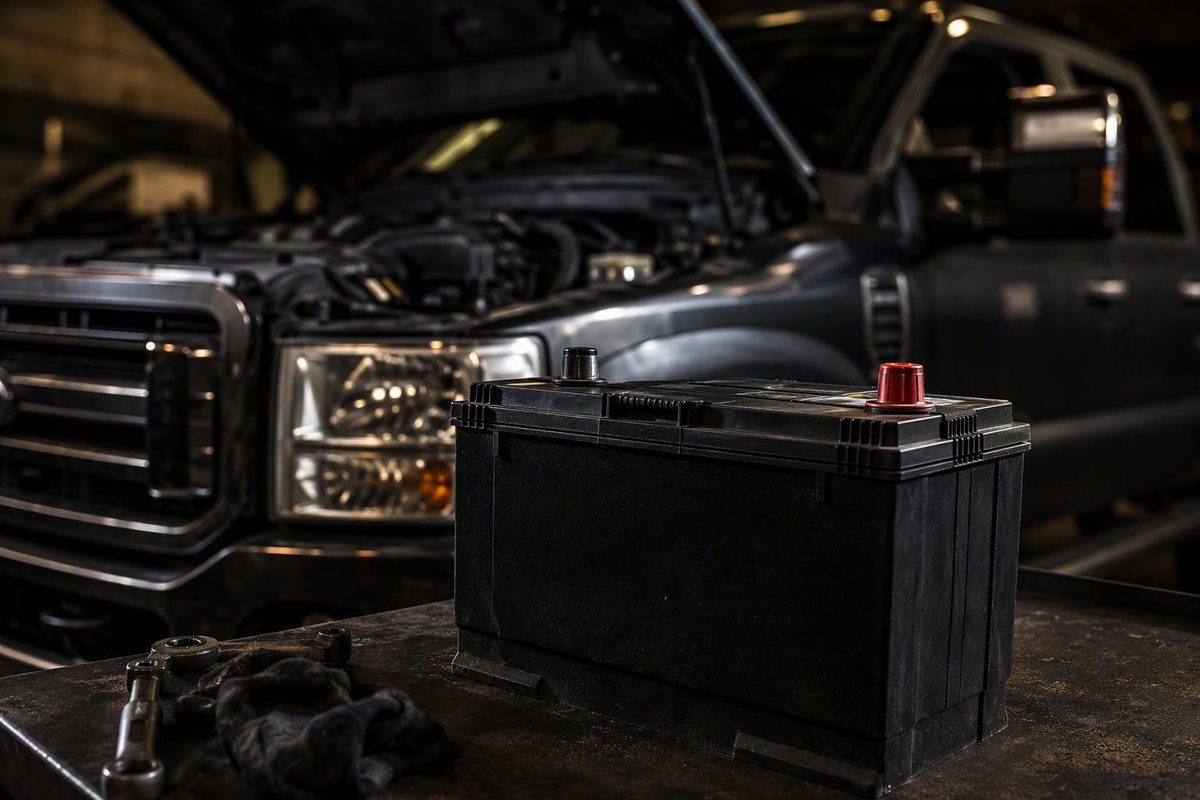
The best battery for a diesel truck is not one universal brand or model. It is the freshest application-approved battery that matches the truck’s required group size, terminal layout, chemistry, cold-cranking amps (CCA) and reserve capacity (RC). If the truck uses two batteries together as its starting bank, buy an identical pair.
For a stock truck originally equipped with flooded batteries, a quality flooded replacement is usually the value choice. Choose AGM when the truck specifies it or an authoritative fitment catalogue approves it and the truck’s cycling or key-off electrical demand justifies the extra cost. Do not assume AGM is required merely because the engine is diesel.
Match the battery to the job
| Truck use | Sensible choice | What to verify |
|---|---|---|
| Stock daily driver | Fresh OEM-spec flooded battery or pair | Original chemistry, CCA and RC |
| Factory-equipped with AGM | Identical application-approved AGM battery or pair | Exact fit and charging requirements |
| Frequent subzero starts | Approved option with at least the specified CCA; consider a higher-CCA fit if the manufacturer permits it | Compare CCA, not the larger CA, HCA or MCA figure |
| Moderate key-off accessory use | Approved battery with adequate RC; AGM may suit repeated cycling better if approved | RC, chemistry and charging compatibility |
| Winch, refrigerator, inverter or work equipment | Preserve the starting bank and consider a fused, isolated auxiliary system | Cable sizing, overcurrent protection and battery isolation |
Ford’s battery-shopping guidance identifies group size, CCA and RC as the three main checks. It defines CCA at 0°F, says the replacement should match the owner’s manual or original battery, and notes that a slightly higher CCA may help in a cold climate. Ford also warns that CA, HCA and MCA are measured under different conditions and are not substitutes for CCA (Ford). See when higher CCA helps before paying for the largest number on the shelf.
Three defensible buying routes
1. OEM or OEM-spec: the default
Motorcraft for Ford, GM Genuine Parts or ACDelco for Chevrolet and GMC, and Mopar for Ram are straightforward starting points because a dealer can resolve the part against the VIN. An OEM label does not prove that a battery will outlast every aftermarket alternative, but VIN-based selection can reduce uncertainty over dimensions, terminals, hold-downs and required procedures.
A reputable aftermarket battery is equally plausible when its current catalogue explicitly lists the exact year, model, diesel engine and equipment. Compare the free-replacement period, exclusions and local claim process—not merely the largest warranty number.
2. Premium starting AGM: for approved demanding applications
AGM can be worth considering where it is specified or approved, particularly when cycling and vibration resistance matter. It is not a universal upgrade: the case, terminals, ratings and charging strategy must remain compatible with the truck.
As a current specification example, the ODYSSEY Extreme ODX-AGM65 is a Group 65 battery rated at 950 CCA and 145 minutes RC. The manufacturer listed it at $436.99 on September 25, 2026 (ODYSSEY). Two would cost $873.98 before tax, installation and any core deposits. That price and performance are irrelevant unless Group 65 and this specific battery are approved for the truck.
3. Dual-purpose AGM: for some key-off use
A dual-purpose AGM combines starting output with more cycling capability. For example, the Optima YellowTop DH7 is an H7 AGM rated at 880 CCA and 155 minutes RC; its manufacturer listed a $379.99 price on September 25, 2026 and provides a vehicle-fit checker on the product page (Optima). It is an example to compare after fitment—not a blanket recommendation for a Cummins, Duramax or Power Stroke.
Regularly running substantial equipment with the engine off calls for more than a different starting battery. A properly designed auxiliary system keeps those loads from leaving the truck unable to start.
Verify these nine details before buying
- Exact vehicle: year, make, model, diesel engine and relevant equipment. Use the VIN where available.
- Battery arrangement: one starting battery, two batteries wired as one starting bank, or a starting battery plus an isolated auxiliary battery.
- Group size: Battery Council International says its classifications account for maximum dimensions, terminal arrangement, performance and chemistry—not dimensions alone (BCI).
- Physical fit: measure the tray if the existing installation appears modified, and verify cable reach and hood clearance.
- Terminal layout and type: a reversed layout can make otherwise similar batteries unusable or unsafe.
- Hold-down: the battery must be secured with the intended hardware. Use this battery tray and hold-down checklist.
- Chemistry: replace AGM with AGM unless vehicle-specific service information authorizes another type.
- CCA and RC: meet the specified CCA and required capacity. Reserve capacity is especially relevant to key-off loads.
- Date and warranty: Ford recommends asking for the newest available battery in the required size. Keep the receipts for both batteries in a pair.
Stop before buying if the owner’s manual, existing labels and retailer catalogue disagree. Resolve the discrepancy by VIN through a dealer parts department or another authoritative catalogue.
Replace a paired starting bank as a pair
When two batteries are wired together as the truck’s starting bank, replace them with the same model, chemistry, ratings and preferably a similar production date. A new battery and an aged battery can charge and discharge unevenly.
Both AutoZone’s dual-battery guidance and Optima’s technical explanation recommend replacing paired diesel starting batteries together. They distinguish that arrangement from a separate auxiliary or deep-cycle battery, which may be assessed independently (AutoZone, Optima).
Before replacing the pair, have each battery tested separately and check the charging system. Loose or corroded connections, parasitic draw and charging faults can mimic failed batteries or shorten the life of new ones.
Compare the installed cost, not one shelf price
A complete quote should identify:
- whether the price covers one battery or two;
- the exact part number, chemistry, CCA and RC;
- diagnostic and charging-system tests;
- terminal cleaning and installation labor;
- any battery-monitor reset or relearn required for that model year;
- core deposits or credits, tax and disposal charges; and
- who handles a warranty claim and whether labor is covered.
That comparison usually matters more than choosing between two familiar logos. First establish what the truck requires; then compare fresh, correctly fitted batteries on ratings, warranty, local availability and total installed cost.