
9 min read ·
Get Your Battery Core Deposit Back Without Surprises
Find out when a car battery core deposit is refunded, what can disqualify a return, and why California's separate $2 battery fee is not returned.
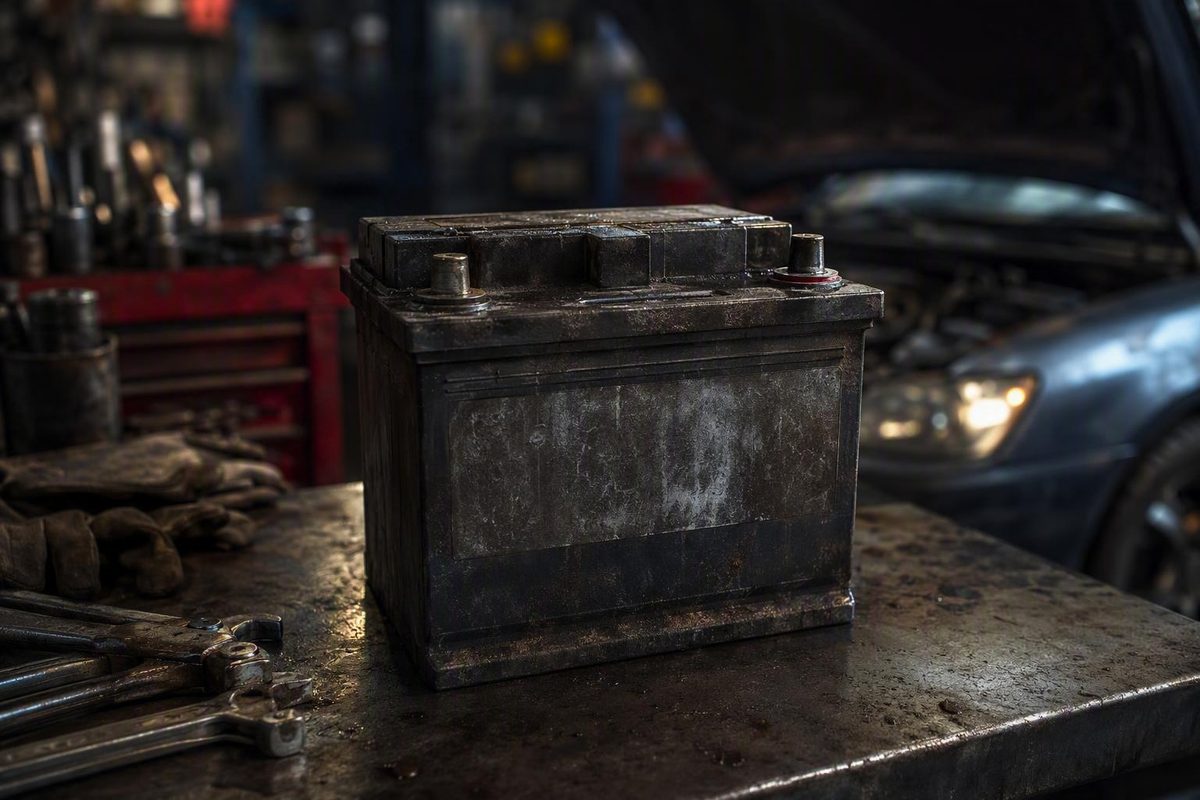
Yes. You generally get the core charge back on a car battery when you return an eligible old battery to the correct seller within the applicable deadline. The refund is conditional: the store may require the receipt, the battery being replaced or an equivalent core, an acceptable condition, and return to the original purchase location. Separate state battery fees, including California’s $2 fee, are not part of the refundable core deposit.
Core charges vary. A secondary-source estimate places many charges at $5 to $20, while Batteries Plus gives $22 for a Group Size 48 battery as one example and says its automotive lead-acid deposits generally range from $10 to $75. Your receipt—not a national average—determines the amount you can recover.
Retailer policies and state requirements can change. Confirm the terms on your receipt and the current rules where the sale occurred.
Select your state and retailer, then enter the figures from your receipt to check the deadline and net battery cost.
The state lookup shows only verified examples from the cited material. Enter the actual battery price and core charge from your receipt; tax is excluded because its treatment varies.
Core deposit: Amount not supplied; California requires it to be separately stated.
Separate state fee: $2, not part of the core refund.
Rule type: Refundable replacement-battery core deposit.
Published amount: Generally $10–$75; $22 is the Group Size 48 example.
Return timing: Varies by store.
Core standard: Equivalently sized; smaller, extremely dirty, damaged, or leaking batteries may not qualify.
Leave dates blank if your receipt or retailer supplies a different controlling deadline.
California’s cited state period is 45 days. Enter both dates to compare them; the receipt and current seller policy still control.
Enter the new-battery price to calculate the net cost.
Current example assumes a $22 eligible core refund and shows California’s separate $2 fee. The $22 figure is Batteries Plus’s Group Size 48 example, not a universal charge.
| State | Deposit Information | Refund Period | Separate Fee |
|---|---|---|---|
| Arkansas | Amount — | 30 days | — |
| Arizona | Amount — | 45 days | — |
| California | Separately stated refundable deposit; amount — | 45 days | $2 battery fee |
| Colorado | Allowed deposit; $10 minimum | 30 days | — |
| Other states | Check receipt and current law | — | — |
| Retailer | Published Deposit | Deadline | Return Detail |
|---|---|---|---|
| Batteries Plus | Generally $10–$75; $22 Group Size 48 example | Varies by store | Equivalently sized battery; purchase store described |
| Interstate | — | — | Materially similar, undamaged battery; pickup or installation can avoid collection |
| Costco | — | — | Published page says fee is refunded when used battery is returned |
| Another retailer | Use receipt | — | Confirm store, sales channel, match, condition and documents |
A dash means the supplied evidence does not provide the figure. Recycling acceptance alone does not establish eligibility for a refund.
A Refund Requires More Than Recycling the Battery
The old battery being replaced is the core. The additional amount charged with the replacement is usually labeled core charge, core deposit, or core fee. It gives the buyer a financial reason to return the used battery.
There are three common outcomes:
- You provide an eligible old battery when collecting or installing the replacement, and the deposit is avoided, offset, or charged and immediately credited according to local rules.
- You pay the deposit, install the replacement, and later return the old battery for a refund.
- You take the battery to another retailer or recycling facility. It may be recycled, but the original deposit may remain unclaimed.
Recycling acceptance and core-refund acceptance are not interchangeable. A recycling center can properly receive the battery without having access to the original sale or owing the deposit collected by another business.
Battery Council International’s state recycling-law reference distinguishes required deposits, allowed deposits, refund periods, and separate fees. State rules are not uniform, and retailer requirements can add another layer.
Interstate, for example, says a pickup store does not collect its deposit when the customer provides an accepted, materially similar battery in undamaged condition at pickup or installation. Otherwise, the deposit is charged and later refunded after an eligible return. That is Interstate’s policy, not a nationwide rule.
Core Deposits, State Fees, and Tax Are Different Charges
Read each battery-related line on the receipt separately. Returning a core does not necessarily reverse every charge associated with the purchase.
| Receipt Line | Purpose | Refund Treatment | Verify |
|---|---|---|---|
| Core charge or deposit | Encourages return of a used battery | Usually refundable if eligible | Amount, deadline and location |
| State or environmental fee | Funds a government or waste program | Often not a core refund | Exact label and local law |
| Sales tax | Tax treatment of the transaction | Varies | Whether it is adjusted |
| Battery price | Price of the replacement | Not a core refund | Product-return terms |
The available evidence does not establish a nationwide rule requiring tax charged on a core deposit to be returned. Check the final return receipt to see whether the retailer adjusted tax as well as the deposit.
California Keeps the $2 Fee Separate
California distinguishes the refundable replacement-battery core deposit from the separate California Battery Fee. Official guidance says the core deposit for a new replacement lead-acid battery must be separately stated on the invoice. It must be charged even when the buyer supplies a used battery of the same type and size at the time of purchase, according to the CDTFA industry guidance.
That invoicing requirement does not make the core deposit permanently nonrefundable. It means a California receipt may show both the required charge and a corresponding refund or credit. The supplied guidance does not fully explain the point-of-sale mechanics, so confirm how both entries will appear.
The separate California Battery Fee has been $2 since April 1, 2022, according to the California Department of Tax and Fee Administration. It is not the refundable core-deposit amount. Returning the old battery therefore does not erase that $2 fee.
Return Deadlines Depend on the State and Seller
There is no nationwide return window. Verified state examples in BCI’s recycling-law table include 30-day refund periods for Arkansas and 45-day periods for Arizona and California. Colorado is listed with an allowed deposit, a $10 minimum, and a 30-day refund period.
An allowed deposit is not the same as a required deposit. Definitions, exceptions, and state-law footnotes can also affect an individual sale. Use the receipt, the seller’s written policy, and the current law where the battery was sold.
Retailer timing can be more specific. Batteries Plus says return timing varies by store, while its policy describes returning an equivalently sized battery to the purchase store. Costco says its core fee is refunded when the used battery is returned, but its published core-fee guidance does not provide the amount, deadline, documentation standard, matching rule, or refund method.
A different branch may accept the battery for recycling yet be unable to reverse a deposit collected through another store or sales system. Confirm the designated location before transporting the battery.
The Replaced Battery Is Usually the Safest Core
There is no universal matching standard used by every seller. Published policies refer to an equivalently sized battery, a materially similar product, or, in broader auto-parts policies, the exact purchased part.
Returning the battery removed from the vehicle creates the clearest connection to the replacement purchase. If the vehicle used a Group Size 48 battery, bringing back that battery is less ambiguous than presenting a smaller powersports or lawn-and-garden battery.
A retailer may evaluate:
- the battery category, such as automotive, marine, commercial, or powersports;
- physical size or battery group;
- whether it is materially similar to the replacement;
- whether the case and other major components are intact;
- whether it is leaking, badly damaged, or excessively dirty.
Batteries Plus describes an equivalently sized-battery standard and says smaller, extremely dirty, damaged, or leaking batteries may not qualify. Contact the receiving store before moving a leaking or seriously damaged battery. Describe its condition and request the store’s safety instructions.
There is no supported nationwide rule that a core must fail a battery test. A driver may replace a battery preventively, and the available retailer policies do not establish a universal pass-or-fail requirement for core eligibility.
Bring Proof Tied to the Original Transaction
Keep the paper receipt, email receipt, order confirmation, and packing slip until the refund is complete. These records establish the deposit amount, purchase channel, store, and transaction date.
If the receipt is missing, call before visiting. Ask whether the seller can locate the transaction through an order number, customer account, payment record, or other proof of purchase. The evidence does not establish that every seller refuses every undocumented return, but alternative lookup methods are not guaranteed.
Before leaving for the store, confirm four transaction-specific points:
- the last eligible return date;
- the location authorized to issue the refund;
- the required battery type, size, and condition;
- the documents needed to connect the core to the purchase.
At the counter, ask how much will be refunded, which receipt line is being reversed, how the credit will be issued, and whether tax on the deposit will be adjusted. Obtain a return receipt showing a core refund rather than a document that merely confirms recycling acceptance.
Online Purchases Can Split Responsibility Between Systems
An online battery price may exclude a deposit collected by the pickup store. The online seller, pickup counter, and another branch of the same chain may not share identical refund access.
Confirm which location owns the deposit before returning the battery. The packing slip or pickup receipt may control even if the initial order was placed through a website.
For home installation, keep the old battery and transaction documents together. Return the removed battery promptly rather than relying on a generalized window.
When a store installs the replacement, it may already possess the old battery and complete the exchange during that transaction. In California, however, the invoice must still separately show the refundable deposit even when a same-type-and-size battery is supplied at purchase. Check that the final receipt records what happened to that amount.
Core-Charge Amounts Are Not Nationally Standardized
Batteries Plus says its automotive lead-acid deposits generally range from $10 to $75, depending on the battery and state requirements. Its $22 Group Size 48 example is not a promised charge for every Group 48 purchase or every store.
A Jalopnik explanation gives a narrower estimated range of $5 to $20. The difference between that estimate and the retailer’s wider range shows why a claimed typical amount cannot predict a particular receipt.
For a specific purchase, use this order of authority:
- The amount and label printed on the receipt.
- The written policy for that retailer, store, and sales channel.
- The law applying where the sale occurred.
- Confirmation from the location designated to receive the core.
If the draft or retailer page does not supply an amount or deadline, it cannot be inferred reliably. Treat it as unknown until the seller confirms it.
A Denied Refund Should Be Traced to a Specific Rule
First identify the disputed receipt line. A refundable core deposit is different from a statutory fee, environmental charge, sales tax, or battery price.
Then compare the transaction with the applicable requirements: purchase date, return date, designated store, proof of purchase, battery match, and battery condition. A denial caused by the wrong location or a missing transaction record may be procedural. An expired deadline or ineligible battery may be substantive.
Ask the employee to identify the written core-return policy governing the sale. If the documents and battery appear to satisfy it, request review by a manager or customer-service representative. For an online order, contact the online service channel as well as the pickup store when responsibility is unclear.
Another retailer’s policy does not establish the rules for your transaction. Neither does an online anecdote involving a different state, store, or battery type.
If the battery no longer qualifies for a refund, it should still enter an appropriate recycling channel. Federal universal-waste rules promote battery collection and recycling, although EPA guidance notes that spent lead-acid batteries may fall under separate federal requirements and that state programs can differ.
Proper recycling does not retroactively satisfy an expired or otherwise unmet core-deposit condition. Before leaving the battery anywhere, establish whether the location is issuing the refund or accepting it only for recycling.
Common Core-Refund Questions
Do You Need the Receipt?
Bring the receipt or packing slip. It connects the return to the deposit, purchase store, and sales channel. If it is missing, ask the seller whether another transaction record is acceptable before making the trip.
Can You Return the Battery to Another Retailer?
It may accept the battery for recycling, but it generally cannot refund a deposit collected by an unrelated seller. Even another branch of the original chain may lack access to the transaction. Confirm first.
Can a Damaged Battery Be Rejected?
Yes. Depending on the policy, leaking, seriously damaged, incomplete, extremely dirty, or incorrectly sized batteries may be ineligible. Contact the designated store for acceptance and handling instructions.
Is California’s $2 Fee Refunded With the Core?
No. The $2 California Battery Fee is separate from the refundable replacement-battery core deposit. A California receipt can contain both entries, but returning the core does not make the state fee refundable.