
22 min read ·
What to Check Before Paying for a New Accord Hybrid Battery
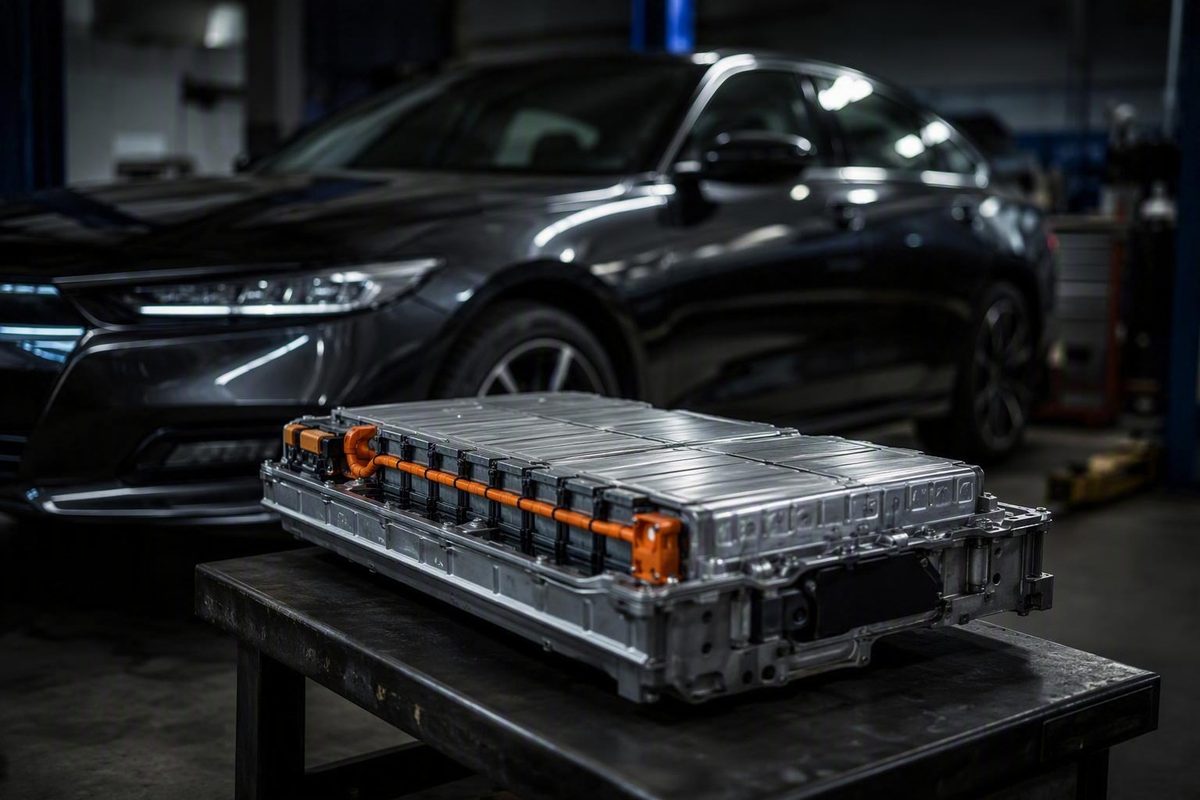
Honda Accord Hybrid battery replacement is not one standardized repair. The correct pack, realistic installed cost, warranty prospects, and available replacement choices depend on the model year, VIN, diagnosis, location, battery condition, and installer.
Before buying anything, confirm that the estimate concerns the high-voltage traction battery, not the ordinary 12-volt battery. Obtain the fault codes and test findings in writing, check Honda coverage for the VIN, and compare itemized quotes based on the same pack type and service scope.
The verified seller-price evidence in this guide extends through model year 2024. Owners of 2025 and 2026 vehicles should obtain a VIN-specific dealer or specialist quote rather than applying an earlier model’s price or fitment.
First, Confirm Which Battery the Estimate Covers
This guide concerns the high-voltage traction battery that stores energy for electric assistance. It does not concern the conventional 12-volt auxiliary battery, which is separate and much less expensive.
Every Accord Hybrid has both:
- High-voltage traction battery: Stores energy used by the hybrid drive system and recovered during operation. Replacement requires model-specific parts and high-voltage safety procedures.
- 12-volt auxiliary battery: Supports conventional low-voltage functions, including computers, control modules, lighting, and system startup.
A weak 12-volt battery can contribute to warning messages, erratic electronic behavior, or startup trouble that an owner may mistake for traction-battery failure. Diagnosis should therefore precede any high-voltage replacement recommendation.
Require every estimate or diagnostic report to identify:
- Which battery was tested and which one is being recommended for replacement
- All diagnostic trouble codes and relevant sub-codes
- The test findings supporting the recommendation
- The proposed replacement part number
- Whether the replacement is new, remanufactured, new-cell, a rebuild kit, or used
- Whether it is a complete assembled pack
- Which electronics, cooling components, or other hardware are included
- Whether diagnosis, installation, setup, taxes, freight, and core charges are included
Never compare a quote for an ordinary 12-volt battery with a quote for a high-voltage traction pack. Even if both documents say “Accord Hybrid battery,” they describe fundamentally different repairs.
Accord Hybrid Batteries by Model Year and Generation
Honda has used distinctly different hybrid systems in the Accord. The 2005–2007 Accord Hybrid is an older Integrated Motor Assist application using a nickel-metal-hydride battery. Accord Hybrids from 2014 onward use lithium-ion batteries within Honda’s two-motor hybrid architecture. Those generations do not share interchangeable packs, prices, or service assumptions. Brickell Honda distinguishes the early IMA and modern two-motor Accord Hybrid systems.
Commercial suppliers also group applications differently. One seller may combine 2014–2016, while another separates 2014–2015 from 2017. These categories describe what each supplier markets; they do not establish universal interchangeability.
| Accord Hybrid model year | General system distinction | Examples of seller grouping | What to verify |
|---|---|---|---|
| 2005–2007 | Older IMA system; nickel-metal-hydride traction battery | Commonly listed as one 2005–2007 application | VIN, part number, pack condition, complete pack versus rebuild kit, core terms |
| 2014–2016 | Lithium-ion battery in the two-motor architecture | One seller covers 2014–2016; another lists 2014–2015 separately | VIN, exact part number, included electronics, installation requirements |
| 2017 | Lithium-ion two-motor system | Sometimes listed as a stand-alone year | VIN, part number, pack condition, installer availability |
| 2018–2024 | Later lithium-ion two-motor applications | One supplier groups 2018–2024 | Exact year and VIN, compatible pack, availability, installation scope |
| 2025–2026 | Not covered by the verified seller-price listings used here | No supported price grouping in the supplied evidence | Obtain a current VIN-specific quote and part confirmation |
The VIN matters even when a product page appears to name the correct year. A seller may identify more than one compatible option or require a VIN check before confirming fitment. For example, Best Hybrid Batteries asks 2014–2016 buyers to submit the VIN when its system finds multiple options.
Treat a model-year label as the beginning of fitment verification, not the end. Ask the seller and installer to put the confirmed VIN application and replacement part number on the quote.
The available evidence does not establish one OEM part number, capacity, programming rule, or service procedure for every Accord Hybrid year. Those details must be confirmed for the individual vehicle and proposed replacement.
Honda Accord Hybrid Battery Replacement Cost by Year
Prices checked August 25, 2026, show why model year and product type matter. Selected 2005–2007 listings range from $999 to $2,599, while several listings for newer Accord Hybrids range from approximately $2,850 to $3,550 before all possible labor, taxes, freight, core, or other charges. These are advertised examples, not a universal “typical” replacement cost. Greentec’s Accord category shows its model-year groupings, advertised prices, installation labels, and selected warranty durations.
| Model year | Advertised option | Listed price | Classification |
|---|---|---|---|
| 2005–2007 | Greentec remanufactured pack; 12-month warranty | $999 | Seller-listed battery price |
| 2005–2007 | Greentec new 8.0 Ah cell product; 36-month warranty | $1,495 | Seller-listed battery price |
| 2005–2007 | Electron remanufactured rebuild kit | $1,799 | Seller-listed kit price |
| 2005–2007 | Electron remanufactured complete pack | $2,099 | Seller-listed battery price |
| 2005–2007 | Electron new-cell rebuild kit | $2,299 | Seller-listed kit price |
| 2005–2007 | Electron complete pack with new cells | $2,599 | Seller-listed battery price |
| 2014–2016 | Best Hybrid Batteries fully remanufactured assembled pack | $3,549 | Seller-listed battery price |
| 2014–2016 | Above pack plus seller-estimated professional installation | About $4,049 | Illustrative subtotal |
| 2014–2015 | Greentec listed options | $2,850–$3,550 | Seller-listed range; shop installation only |
| 2017 | Greentec listed options | $2,850–$3,550 | Seller-listed range; shop installation only |
| 2018–2024 | Greentec listed options | $2,850–$3,550 | Seller-listed range; shop installation only |
| 2025–2026 | No verified seller price in the supplied evidence | Not established | VIN-specific quote required |
2005–2007 pricing
Greentec displays a $999 remanufactured 2005–2007 pack with a 12-month warranty and a $1,495 product with new 8.0 Ah cells and a 36-month warranty. These are seller-listed battery prices, not confirmed installed totals.
Electron Hybrid Solutions displays four additional 2005–2007 choices: $2,099 for a remanufactured complete pack, $2,599 for a complete pack with new cells, $1,799 for a remanufactured rebuild kit, and $2,299 for a new-cell rebuild kit. Its category listing does not establish that installation, taxes, shipping, or core-related costs are included. Electron’s catalog distinguishes its complete Accord packs from its rebuild kits.
A rebuild kit is not equivalent to a complete assembled battery. Its lower shelf price does not prove a lower installed total or establish that one company will accept responsibility for the finished pack.
2014–2016 pricing
Best Hybrid Batteries lists a fully remanufactured, fully assembled 2014–2016 pack at $3,549 and states that professional installation generally adds approximately $500. Using those seller figures produces an illustrative subtotal of about $4,049 before taxes and possible shipping-related charges. The seller’s product page provides the pack price, condition, contents, installation estimate, and VIN-verification instruction.
The calculation is:
- Battery: $3,549
- Seller-estimated installation: approximately $500
- Illustrative subtotal: approximately $4,049
This is not a binding installed quote. Labor can vary by location, and additional delivery or remote-area fees may apply.
2014–2015, 2017, and 2018–2024 pricing
Greentec displays $2,850–$3,550 ranges for 2014–2015, 2017, and 2018–2024 applications. The newer listings are marked “Shop Install Only,” so buyers should ask whether the selected price includes installation or whether labor will be quoted separately.
Do not assume that the low end applies to every year or that all choices have the same condition and warranty. A displayed range may represent different product configurations rather than a negotiable price for one identical part.
No supported listing in the supplied evidence establishes a price for a 2025 or 2026 Accord Hybrid. Current-model owners should request a VIN-specific part number and written installed quote.
How supplier prices compare with dealer estimates
Dealer-authored estimates offer market context but are not vehicle-specific offers. Honda Libertyville estimated approximately $3,000–$4,500 installed for an out-of-warranty modern Honda hybrid battery in its May 2026 guide. It describes the amount as representative and dependent on the vehicle, diagnosis, battery type, and replacement source. Honda Libertyville presents the range as an estimate rather than a binding quote.
Brickell Honda gives a broader general industry estimate of approximately $3,000–$7,000 or more installed for modern Accord two-motor lithium-ion packs and approximately $2,000–$3,500 installed for older IMA nickel-metal-hydride applications. It expressly says these are general ranges, not dealership quotes.
The difference between the two modern ranges does not necessarily indicate an error. They may reflect different markets, labor rates, replacement conditions, parts, and service scopes. Neither range replaces an itemized quote tied to the VIN.
Calculate the Out-the-Door Cost, Not Just the Pack Price
A low battery listing can become substantially more expensive after transaction and installation costs are included. Build the estimate from separate line items rather than relying on a product-page headline.
A complete total may include:
- Diagnostic charge
- Battery pack or rebuild kit
- Installation labor
- Sales tax
- Shipping or freight
- Residential-delivery surcharge
- Core deposit
- Core-return freight or packaging
- Programming, initialization, calibration, or setup if applicable
- Optional warranty coverage
- Towing or vehicle transportation
- Additional repairs identified during diagnosis
Do not assume that programming is always required—or never required. Requirements can depend on the model year and replacement. Ask the installer to identify any setup by name and include it in the written estimate.
Core deposits can change the cash required
A core is the old traction battery returned to the supplier. Its housing, electronics, or battery components may have value for remanufacturing or recycling.
For shipped orders, Greentec says it may add a refundable $500 core deposit at checkout. Its stated policy gives those customers 45 days to return the core, adds $200 for residential delivery, and deducts return-shipping cost from the refund. These are seller-specific terms, not universal rules. Greentec’s listing states the cited deposit, deadline, delivery fee, and return-freight treatment.
Even if the deposit is ultimately refunded, it increases the cash or available credit required at purchase. The final refund may also be lower than the deposit if the policy permits freight or other deductions.
Ask:
- How much is the core deposit?
- When does the return period begin?
- Who arranges and pays return freight?
- Must the original pack be intact?
- Must it match the purchased application or part type?
- Is the supplied crate or container mandatory?
- What deductions can be taken?
- What records prove timely return?
- When should the refund appear?
Optional warranties can materially increase the total
Best Hybrid Batteries includes a three-year, unlimited-mileage warranty with its listed $3,549 pack and offers a six-year upgrade for $1,065. Adding the option produces a battery-and-upgraded-warranty amount of $4,614 before installation, taxes, and possible shipping charges.
Adding the same seller’s approximate $500 installation estimate produces this illustrative subtotal:
- Battery: $3,549
- Six-year warranty upgrade: $1,065
- Approximate installation: $500
- Illustrative subtotal: $5,114
Those figures come from the seller’s advertised product and warranty options; they are not a vehicle-specific quote. The supplied product information also does not establish that every diagnostic, labor, towing, or freight expense would be covered during a claim. Review the advertised warranty durations and upgrade price alongside the complete written terms.
Use this quote-comparison template
Have each dealer or independent specialist complete the same fields:
| Quote field | Provider A | Provider B | Provider C |
|---|---|---|---|
| Vehicle VIN | |||
| Model year and trim | |||
| Diagnosed codes and findings | |||
| Proposed part number | |||
| New, remanufactured, new-cell, kit, or used | |||
| Complete assembled pack? | |||
| Electronics included? | |||
| Battery price | |||
| Diagnostic charge | |||
| Diagnosis credited toward repair? | |||
| Installation labor | |||
| Programming or setup | |||
| Taxes | |||
| Shipping or freight | |||
| Residential-delivery charge | |||
| Core deposit | |||
| Core deadline and return cost | |||
| Warranty term and mileage limit | |||
| Labor and freight covered under warranty? | |||
| Estimated completion time | |||
| Total due at purchase | |||
| Expected permanent cost after core refund |
Also ask whether the diagnostic charge will be credited if you approve the repair. A battery price is not meaningful until you know both the amount due at purchase and the expected permanent cost after any core refund.
Diagnose the System Before Authorizing a New Pack
Symptoms that justify investigating the traction battery include:
- Declining fuel economy
- Weaker electric assistance
- Hesitation or reduced power
- Rapid swings in the charge gauge
- Poor charge retention
- An IMA warning
- A “Check Hybrid System” message
- Frequent or unusually loud battery-cooling fan operation
None proves by itself that the complete traction battery has failed. Other possible causes include a weak 12-volt battery, blocked battery-cooling airflow, sensors, software, wiring, high-voltage connections, a cooling fan, or another hybrid-system component.
What the battery-related codes mean
P0A80 is commonly described as “Replace Hybrid Battery Pack,” while P0A7F is commonly described as “Hybrid Battery Pack Deterioration.” Those labels make the traction battery a serious diagnostic focus, but a code name is not a complete test result or automatic repair authorization.
For older IMA cars, one commercial technical guide describes the 2005–2007 battery as approximately 144 volts and associates P1447 and P1449 with battery deterioration or overheating. It also notes that sub-codes can distinguish different causes. Because this is seller-authored guidance rather than official Honda diagnostic documentation, the code, sub-code, and supporting test findings should be interpreted using model-specific service information. Greentec’s technical guide provides the cited voltage description and code associations.
Do not accept “the code says battery” as the entire diagnosis. Ask for:
- A written scan report showing all codes and sub-codes
- A test of the 12-volt battery
- Inspection of the traction-battery cooling intake, ducting, and fan
- Inspection of accessible wiring and connections
- Objective traction-pack health findings
- The reason a complete pack is recommended
- A post-repair verification plan
The available evidence does not support one universal state-of-health threshold for every Accord Hybrid generation. It also does not establish that module-level work is appropriate for a particular code. Those decisions require model-specific testing and an installer willing to stand behind the completed repair.
Replacing a worn battery may restore performance or efficiency losses attributable to that battery. It cannot guarantee factory fuel economy.
Check Honda Warranty Eligibility Before Paying
Do not authorize an out-of-pocket replacement until Honda or an authorized dealer has checked the VIN for remaining coverage.
Dealer-authored sources commonly report 8 years or 100,000 miles of high-voltage battery coverage in the jurisdictions they discuss. Some also report that qualifying vehicles governed by California-emissions warranty provisions may receive longer coverage, sometimes described as up to 10 years or 150,000 miles. These are dealer summaries—not definitive Honda coverage documents for an individual Accord—and eligibility must be established from the applicable warranty booklet and a VIN-specific Honda determination. Honda Libertyville explains the reported terms and the need for vehicle-specific verification.
Warranty eligibility can depend on:
- VIN
- Model year and configuration
- Current mileage
- Original in-service date
- Current and prior registration jurisdiction
- Applicable emissions certification
- Title history
- The governing warranty booklet
- Honda’s diagnostic findings and coverage criteria
- Whether the condition is a covered defect or expected gradual capacity decline
Use this verification workflow:
- Record the complete VIN.
- Record the current odometer mileage.
- Identify the current registration state.
- Find the original in-service date if available.
- Note the model year, trim, and title history.
- Collect the diagnostic codes and written findings.
- Read the warranty booklet issued for that vehicle and model year.
- Ask Honda or an authorized dealer for a VIN-specific coverage check.
- Request the coverage decision in writing before approving customer-pay work.
The warranty clock may begin on the original in-service date, not when a later owner bought the vehicle used. A warning code, battery age, or perceived capacity loss does not automatically qualify the car for free replacement.
Do not rely on a universal list of “CARB states” copied from an unrelated vehicle or model year. Registration history, vehicle certification, warranty language, and the individual repair diagnosis can all matter. The governing Honda documents and VIN-specific decision control.
Compare New, Remanufactured, New-Cell, Rebuild-Kit, and Used Packs
No battery category is automatically the best choice. Compare the complete installed cost, vehicle condition, expected ownership period, warranty support, and installer competence.
The available evidence does not establish current availability, completeness, or warranty terms for every new Honda or Honda-remanufactured Accord battery. Treat those details as questions to verify rather than assumptions.
| Replacement category | Upfront price tendency | Assembly question | Main uncertainty | Evidence to request |
|---|---|---|---|---|
| New OEM | Often quoted at a higher price | Is it a complete Honda assembly, and what hardware is included? | Availability, exact part number, labor, and coverage | VIN match, Honda part number, condition on invoice, written warranty, installed quote |
| Honda-remanufactured | May be priced below a new Honda unit | Is it a complete assembly for this VIN? | Availability and exact remanufacturing and warranty terms | Honda part number, condition label, warranty administrator, labor coverage |
| Independent remanufactured | Often marketed below new OEM pricing | Complete pack or partial assembly? | Retained-component condition, rebuilding process, support | Test report, included electronics, warranty, installer responsibility |
| New-cell aftermarket | Varies | Complete pack or cells installed in reused hardware? | “New cells” does not mean every component is new | Cell origin, exact contents, electronics, assembly and test records |
| Rebuild kit | May have a lower advertised price | Usually not equivalent to a complete assembled pack | Installer assumes more assembly, testing, safety, and warranty responsibility | Kit contents, reused parts, installer qualifications, finished-pack warranty |
| Used salvage | Often lower initially | May be a complete used assembly | Age, storage, collision or water damage, remaining capacity | Donor history, part number, tests, return rights, written warranty |
New OEM
Ask whether the quote is for a genuinely new Honda assembly and whether it includes all required electronics and hardware. Do not infer completeness from the word “OEM.”
The invoice should identify:
- The exact Honda part number
- The condition as new
- The included components
- Installation labor
- Core requirements
- Warranty duration
- Whether warranty labor is covered
Honda-remanufactured
A Honda-remanufactured pack should be distinguished from an independently rebuilt product. Ask the dealer to identify the condition and part number on the written estimate rather than relying on phrases such as “dealer battery.”
Do not assume availability, assembly completeness, or labor coverage. Obtain the applicable written warranty before authorizing the repair.
Independent remanufactured
In general, a remanufactured battery is a used pack that has been disassembled, tested, and rebuilt. That description does not establish how many components were replaced, the condition of every retained part, or a guaranteed service life.
Request:
- The testing and balancing process
- Which components are replaced
- Whether electronics and the enclosure are included
- Batch or identifying information
- Pre-shipment test documentation
- The complete written warranty
- The procedure and cost of making a claim
Seller listings demonstrate that remanufactured options exist. They do not independently prove that a particular product will be more reliable or cost-effective than another category.
New-cell aftermarket
A new-cell product uses fresh cells, but it is not automatically equivalent to a completely new Honda assembly.
Ask the seller to define “new-cell” precisely and identify every reused component. Compare the finished assembly and warranty rather than focusing only on the cells.
Rebuild kits
Before buying a kit, determine who will:
- Confirm that the original pack is suitable for rebuilding
- Assemble and test the completed battery
- Resolve a defective component
- Pay repeated removal and installation labor
- Handle warranty communications
- Accept responsibility for reused electronics or hardware
A lower kit price does not establish a lower final cost once skilled labor and warranty exposure are included.
Used salvage packs
A used salvage battery carries the greatest uncertainty.
Require:
- Donor-vehicle mileage
- Pack manufacturing or service age, if available
- Exact part number
- VIN compatibility
- Collision history
- Water or flood exposure history
- Storage history
- Electrical test results
- Return rights
- Written warranty terms
A used pack can reduce the initial parts cost, but weak return protection or a second labor charge can erase the savings. Compare it with the complete installed cost and the time you expect to keep the vehicle.
Compare Warranties by What They Actually Pay For
Published replacement-pack warranties vary. The cited seller examples include 12- and 36-month warranties on selected 2005–2007 products, while another seller advertises three-year unlimited-mileage coverage and a paid six-year upgrade for its 2014–2016 product.
Duration alone is not enough. A longer warranty may have limited practical value if the owner must pay for diagnosis, removal, reinstallation, towing, or freight whenever a claim is considered.
Use this checklist:
- What is the time limit?
- Is there a mileage limit?
- When does coverage begin?
- Is it transferable?
- Which failures and components are excluded?
- Must the seller authorize diagnosis in advance?
- Who pays diagnostic labor?
- Who pays to remove the failed pack?
- Who pays to install the replacement?
- Is towing covered?
- Who pays outbound and return freight?
- Are residential freight charges covered?
- Must an approved installer perform the original work?
- Is proof of core return required?
- Does a replacement unit receive a new warranty term or only the remainder of the original term?
- Is the remedy repair, replacement, credit, or refund?
- How quickly must a claim be filed?
- What happens if the original product is unavailable?
Ask one practical question before choosing: If this pack fails next month, exactly which costs do I pay?
Retain the purchase invoice, diagnostic report, installation record, pack serial or identifying information, warranty document, and proof of core return. Missing records can complicate a later claim.
Installation, Core Return, and the Final Repair Decision
A traction-battery replacement is not comparable to swapping an ordinary 12-volt battery. The pack contains potentially fatal high voltage, and safe service requires training, protective equipment, system isolation, and voltage verification.
An AutoZone-hosted technical transcript warns that hybrid-battery service can cause serious or fatal injury and should be performed only by an adequately trained, qualified technician. It identifies Class 0 high-voltage gloves and a Category III, 1,000-volt-rated meter among the required equipment. AutoZone’s transcript describes the high-voltage risks and specialized safety equipment.
At a safe, high level, professional replacement involves:
- Disabling and verifying the high-voltage system
- Accessing and removing the original pack
- Installing the correct compatible replacement
- Reconnecting electrical and cooling systems
- Completing any required setup
- Verifying system communication and operation
- Clearing and rechecking faults as appropriate
- Preparing the old battery for return or recycling
This is intentionally not a removal tutorial. The cited transcript does not identify the model year to which its detailed procedure applies, so it should not be treated as universal instructions for every Accord Hybrid.
One specialist estimates a professional appointment at approximately 60–90 minutes, but that is a provider estimate rather than a universal labor time. Diagnosis, shop workflow, corrosion, damaged fasteners, additional repairs, software work, and model-year differences can extend the visit. Greentec presents the 60–90-minute figure as its own service estimate.
Protect the core refund
The removed battery may need to be:
- Intact
- The same part type and application as the purchased unit
- Returned in the supplied container
- Protected from shipping damage
- Sent before the seller’s deadline
- Accompanied by the required paperwork
The AutoZone-hosted transcript says a qualifying core must be intact, match the purchased unit’s part type and application, and be returned in the supplied container. Seller rules vary, so obtain the applicable instructions before installation.
Do not discard, dismantle, mark, or independently recycle the core until the supplier confirms that doing so will not eliminate the credit. Photograph the pack and identifying labels before shipment, and retain the freight receipt, tracking number, delivery confirmation, and refund statement.
Decide whether the repair makes financial sense
Compare the complete installed cost—not just the battery price—with:
- The vehicle’s current condition
- Mileage
- Local vehicle value
- Engine, transmission, suspension, brake, tire, and body condition
- Other warning lights or pending repairs
- Replacement-pack condition
- Warranty responsibility
- Expected ownership period
- Availability of a qualified local installer
- The cost and risk of replacing the vehicle
A substantial repair can make sense on a well-maintained Accord that otherwise meets the owner’s needs. A lower-priced pack may be unattractive if it has uncertain condition, weak support, or expensive repeat labor. Conversely, the most expensive option may be difficult to justify if the car has major unrelated repairs pending or will soon be sold.
Use this five-step action plan:
- Confirm the battery involved. Make sure the estimate concerns the high-voltage traction pack, not the 12-volt battery.
- Obtain a diagnosis. Request the codes, sub-codes, 12-volt test, cooling inspection, connection inspection, and traction-pack findings in writing.
- Verify warranty coverage. Check the VIN, mileage, in-service date, registration history, and applicable Honda warranty documents.
- Collect comparable written quotes. Normalize part condition, part number, installation, tax, freight, core terms, and warranty coverage.
- Select a qualified high-voltage installer. Confirm that the installer will stand behind the complete repair and perform any required setup and post-installation checks.
The right next step is not buying the first battery associated with the model year. A qualified diagnosis, VIN-specific coverage check, and itemized out-the-door total are more useful than any single advertised price.
Frequently Asked Questions
How much does a Honda Accord Hybrid battery replacement cost?
For 2005–2007 cars, selected cited listings run from $999 to $2,599, depending on whether the product is remanufactured, new-cell, a complete pack, or a rebuild kit. Several listings for 2014–2024 applications run from approximately $2,850 to $3,550 before all possible charges.
Dealer-authored modern installed estimates discussed above range from approximately $3,000–$4,500 to $3,000–$7,000 or more. Actual cost depends on the model year, VIN, pack condition, labor, tax, freight, core policy, warranty selection, and diagnosis. No verified price in the supplied evidence covers 2025 or 2026 models.
Does P0A80 or P0A7F mean the entire hybrid battery must be replaced?
Not automatically. P0A80 is commonly labeled “Replace Hybrid Battery Pack,” and P0A7F is commonly associated with battery-pack deterioration, but the code label should begin a diagnosis rather than replace one.
Request the complete scan report, supporting battery tests, 12-volt battery results, cooling inspection, and connection checks. Sub-codes and accompanying faults can affect the repair decision.
Is an Accord Hybrid traction battery covered for 8 years or 100,000 miles?
It may be, but the commonly reported 8-year/100,000-mile term is not proof of coverage for an individual Accord. Dealer sources also report longer terms for some qualifying California-emissions vehicles, but the applicable Honda warranty documents and VIN-specific determination control. Honda Universe similarly describes the 8-year/100,000-mile term as applying to many Honda hybrid batteries rather than every vehicle without exception. Its warranty summary should be treated as general guidance, not a vehicle-specific coverage decision.
Confirm the VIN, mileage, original in-service date, registration jurisdiction, title history, diagnostic result, and governing warranty booklet. Obtain Honda’s coverage decision in writing before paying.
Can I replace a Honda Accord Hybrid battery myself?
Traction-battery replacement should not be treated as routine DIY work. The system contains potentially fatal voltage and requires appropriate training, high-voltage protective equipment, a properly rated meter, safe isolation, and voltage verification. The AutoZone-hosted technical transcript expressly limits the work to adequately trained, qualified technicians.
A physically accessible battery is not necessarily a safely serviceable one. Use a qualified high-voltage technician unless you have the required professional training, equipment, service information, and legal authority to perform the work.
What happens to the old battery, and how does the core refund work?
The old battery is commonly returned as a core for remanufacturing or recycling. Depending on the seller, you may pay a refundable deposit or exchange the original battery during installation.
The refund can depend on returning the correct, intact pack in the specified container before the deadline. Return freight or other permitted deductions may reduce the refund. Obtain the policy in writing, preserve identifying labels, and retain shipment and delivery records until the credit appears.