
16 min read ·
Is Your Honda Battery Still Covered? How to Check Before You Pay
The reported 100-month term does not automatically apply to batteries bought from repair shops, parts stores, warehouse clubs or online sellers.
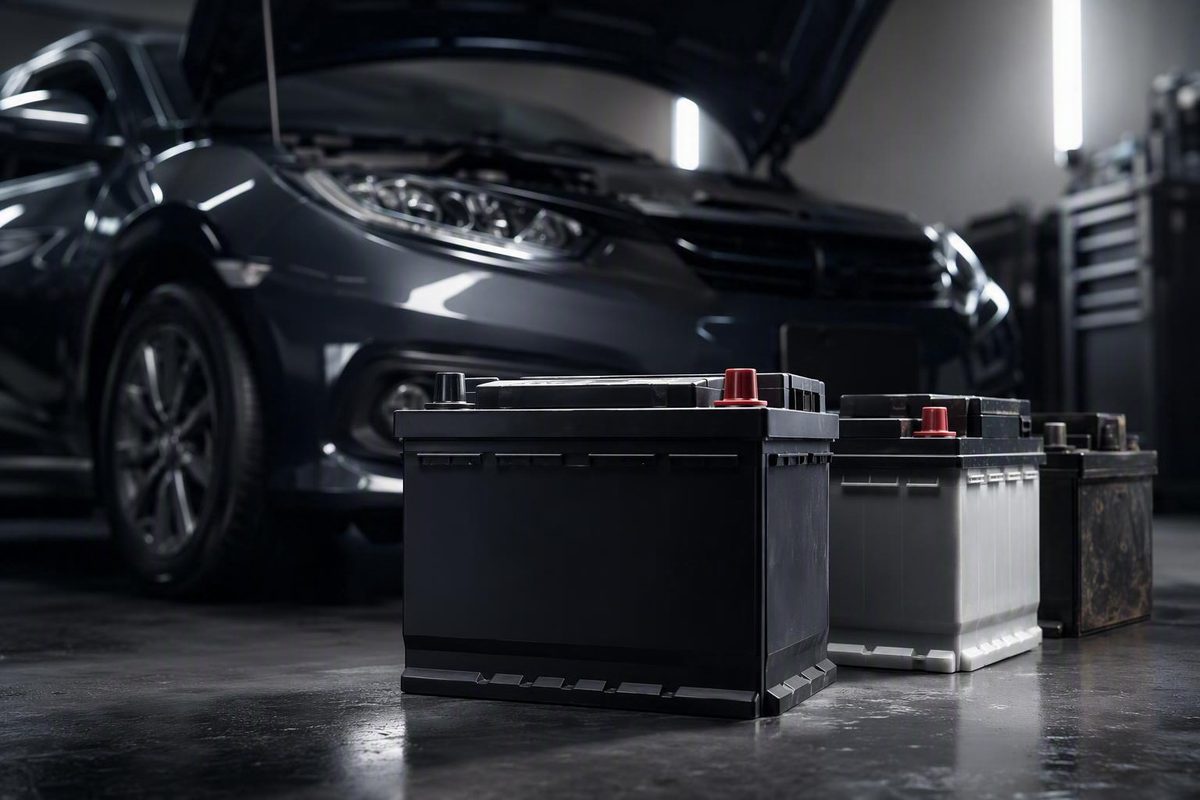
The short answer: which Honda battery warranty might apply?
The answer depends on which battery failed and, for a conventional 12-volt battery, whether it came with the vehicle or was purchased later.
Dealership sources describe two main coverage paths for conventional Honda batteries. The original 12-volt battery is reported as falling under the New Vehicle Limited Warranty, while an eligible replacement purchased from an authorized Honda dealer is reported as having a longer, partly prorated limited warranty.
| Battery category | Reported coverage path | What the reported term means |
|---|---|---|
| Original conventional 12-volt battery | New Vehicle Limited Warranty: 3 years or 36,000 miles, whichever occurs first | Potential coverage only while the vehicle remains within both limits, subject to the applicable written terms, diagnosis, and exclusions. Honda of Watertown reports this original-battery limit. |
| Eligible replacement 12-volt battery purchased from an authorized Honda dealer | 100 months, or 8 years and 4 months | Reported free replacement and installation during months 1–36, followed by prorated credit during months 37–100. Honda of Toms River reports the 100-month term for an authorized-dealer replacement. |
| Hybrid or EV high-voltage traction battery | Vehicle-specific; not established by the evidence reviewed here | Do not apply conventional 12-volt battery terms automatically. Verify the model, model year, jurisdiction, and applicable warranty document. |
“Whichever occurs first” means that both vehicle age and mileage matter. A Honda that is two years old with 40,000 miles would appear to be outside the reported original-battery limit because it crossed the mileage threshold first. A Honda that is two years old with 25,000 miles would appear to remain within the reported time-and-mileage window. Neither example guarantees approval; the written warranty, diagnosis, and any exclusions still control. Honda Universe reports the same 3-year/36,000-mile original-battery limit.
The 100-month term does not mean 100 months of free batteries. Dealership summaries report free replacement and installation for a qualifying defective replacement battery during the first 36 months, followed by a declining prorated credit during the remaining 64 months.
An important evidence limitation applies throughout this guide: the detailed terms reviewed here come primarily from Honda dealership pages and a commercial third-party summary. The evidence does not include Honda’s complete controlling warranty contract for every vehicle, battery, purchase date, or jurisdiction. These sources can help identify the likely coverage path, but the written warranty applicable to your vehicle or battery purchase must control an actual claim.
Original battery coverage: how the 3-year/36,000-mile limit works
The “original battery” in this context means the conventional 12-volt auxiliary or starting battery installed when the vehicle was new. It does not necessarily mean the high-voltage propulsion battery in a hybrid or electric vehicle.
Dealership sources place that original 12-volt battery within the New Vehicle Limited Warranty. To evaluate whether it is still within the reported window, confirm two facts:
- The recorded coverage start date.
- The vehicle’s current mileage.
Ask Honda or an authorized dealer to confirm the coverage start date rather than estimating it from the model year or relying solely on the date shown on your own purchase paperwork. Mileage operates independently, so crossing the reported mileage limit can end the apparent window before the time limit expires.
The powertrain warranty is a different coverage category
Do not treat a longer powertrain term as an extension of routine 12-volt battery coverage. Dealership material separately describes a 5-year/60,000-mile powertrain warranty and a 3-year/36,000-mile New Vehicle Limited Warranty. The fact that the powertrain term is longer does not, by itself, establish continuing coverage for the original 12-volt battery. Apple Tree Honda presents the new-vehicle and powertrain terms as separate coverage categories.
Being within the limit does not prove that the failure is covered
Time and mileage are only an initial screen. A vehicle may be inside the reported warranty window without its no-start condition necessarily resulting from a covered battery defect.
The evidence reviewed here does not provide Honda’s complete definition of a covered defect, diagnostic standard, exclusions, proof requirements, or claim procedure. Testing is therefore necessary before assigning the problem to a warranty category.
Use this initial eligibility screen:
- Confirm that the battery is original. Check previous service invoices, replacement labels, or installation records.
- Ask for the recorded coverage start date. Do not estimate it from the vehicle’s model year.
- Record the current odometer reading.
- Identify the battery type. Confirm that the suspected component is the conventional 12-volt battery rather than a traction battery.
- Locate the applicable warranty booklet.
- Check Honda’s vehicle-specific warranty lookup.
- Ask what testing is required and whether a diagnostic charge will apply if the battery is not covered.
Do not authorize replacement solely because the vehicle appears young enough or has sufficiently low mileage. First ask the dealer to identify the applicable warranty, explain the test results, and disclose any expected customer-pay charges.
The reported 100-month replacement-battery warranty
The reported 100-month term applies more narrowly than its name may suggest. The dealership sources describe a replacement battery purchased from an authorized Honda dealer.
Do not automatically extend that term to a battery purchased from an independent repair shop, parts store, warehouse club, online marketplace, or another seller. Nor should you assume that every Honda-branded battery qualifies regardless of its part number, installation circumstances, purchase date, vehicle, or jurisdiction.
One hundred months equals 8 years and 4 months, but the reported benefit changes substantially after the first three years.
Reported coverage timeline
Months 1–36: Dealer sources report free replacement and installation when an eligible authorized-dealer replacement battery is found to be defective.
Months 37–100: The benefit reportedly changes to a prorated credit toward another battery. Dealer descriptions say that the credit is based on the retail price in effect when replacement occurs, which may differ from the price originally paid. Honda of Watertown describes both phases and the use of current retail prices.
Proration means that the warranty pays only a portion of the relevant battery price.
A commercial third-party summary provides two selected examples: a 60% credit during months 37–45 and a 5% credit during months 96–100. The evidence reviewed here does not contain Honda’s complete official month-by-month schedule, so those examples should not be used to calculate the credit for an unlisted month. CARCHEX provides these selected proration examples.
The evidence also does not establish whether labor or installation remains covered after the initial full-benefit phase. Dealership pages specifically mention free installation during that first phase but do not resolve its treatment later. They likewise do not establish universal treatment of testing, diagnostics, taxes, towing, disposal fees, or repairs to other electrical components.
Two examples of how the phases differ
Qualifying failure during the initial phase: An eligible authorized-dealer replacement battery would appear to fall within the reported free-replacement-and-installation period. That remains subject to the battery’s eligibility, the diagnosis, and the controlling terms.
Qualifying failure during the later phase: The expected benefit would be a partial credit, not automatically a free battery. Ask the dealer to provide the applicable percentage, retail price, credit amount, and remaining charges in writing.
The 100-month term is not a promise that a battery will function for the entire period. It is also not a guarantee that every discharge, no-start event, or failed test will qualify. It describes a reported period during which different levels of limited benefits may be available.
First identify which battery failed
It is the conventional automotive battery relevant to the reported original-battery and authorized-dealer replacement-battery terms discussed above.
It is a different component with different functions, diagnostic requirements, and potentially different warranty terms.
Some dealership pages use broad language about a “hybrid battery” or a battery in a hybrid without clearly distinguishing between the auxiliary 12-volt battery and the high-voltage traction pack. That ambiguity is a reason to rely on vehicle-specific warranty documents instead of treating a generalized web summary as conclusive.
Battery warranty decision tree
-
Is the failed component a conventional 12-volt battery? - No or uncertain: Obtain a component-specific diagnosis before evaluating coverage. - Yes: Continue.
-
Was the battery installed when the vehicle was new? - Yes: Evaluate it under the reported original-battery coverage path. - No: Continue.
-
Was the later battery purchased as an eligible replacement from an authorized Honda dealer? - Yes: Find the purchase or installation date and evaluate it under the reported replacement-battery structure. - No or unknown: Consult the warranty supplied by the actual seller or battery manufacturer.
-
Is the failed component the high-voltage hybrid or EV traction battery? - Go directly to model-specific verification. Do not substitute conventional 12-volt battery terms.
You may be able to identify the component by reviewing:
- The battery invoice or parts receipt
- The part number
- The owner’s and warranty documents
- The location and description of the component
- Dashboard messages
- A diagnostic report
- An authorized dealer’s written findings
Traction-battery coverage may depend on the exact model, model year, jurisdiction, original sale information, and applicable warranty documents. No universal Honda hybrid or EV traction-battery duration can be established from the evidence reviewed for this article. Seek a qualified, component-specific diagnosis before assessing coverage.
How to verify coverage for your exact Honda
Honda provides an online warranty search with two routes: searching by VIN or selecting the vehicle’s year, model, and trim. The captured version of the page displayed a loading or JavaScript error and did not return detailed battery terms, so the tool’s existence does not independently substantiate the coverage periods discussed in this guide. Use Honda’s vehicle-specific warranty search.
Follow this verification sequence:
- Find the relevant warranty booklet. For an original battery, begin with the booklet associated with the vehicle. For a later replacement, locate the written warranty supplied with the battery purchase.
- Search Honda’s system by VIN. This may help identify warranty information associated with the specific vehicle.
- Try year, model, and trim if necessary. Review any returned information carefully for powertrain or configuration differences.
- Locate the replacement-battery invoice. Confirm the seller, purchase date, installation date, part number, and printed warranty language.
- Ask an authorized Honda dealer to identify the controlling document. Request the applicable written terms, not merely a verbal summary.
- Obtain a written estimate before authorizing work. It should distinguish the reported warranty benefit from customer-pay charges.
The lookup may not identify the battery category or resolve a claim. If it fails, retain a screenshot showing the date and error, then request the relevant warranty language from Honda or an authorized dealer in writing.
Ask these specific questions:
- Is this the original 12-volt battery, an eligible dealer-purchased replacement, or a high-voltage traction battery?
- What is the recorded coverage start date?
- What time or mileage limits apply?
- Which written warranty document controls?
- What test result is required for the battery to qualify?
- If the benefit is prorated, what percentage currently applies?
- What retail price will be used to calculate the credit?
- Are testing, diagnostics, labor, installation, taxes, disposal, and towing covered or chargeable?
- Do any exclusions apply to the diagnosed cause?
- What will I owe if the claim is denied?
The vehicle- or battery-specific written warranty takes precedence over a generalized dealership article. The reviewed evidence does not establish that the publisher can verify, administer, or approve a Honda warranty claim.
A practical battery-warranty claim checklist
This is a preparation checklist, not Honda’s official claim procedure. The evidence reviewed here does not establish one manufacturer-prescribed process for every battery, model year, purchase, or jurisdiction.
Gather your records
Bring or have access to:
- The vehicle identification number
- Current mileage
- Vehicle purchase information
- Recorded coverage start date, if available
- Battery purchase receipt
- Battery installation date
- Battery brand and part number
- Previous battery-replacement invoices
- Any prior warranty-replacement records
- Relevant charging-system or electrical repair records
- Photos of labels, date codes, warning messages, or visible damage
- Notes showing when the symptoms began
A missing receipt should not lead you to assume either approval or denial. The supplied evidence does not resolve whether proof of purchase is always required or whether a dealer’s electronic records may be sufficient.
Document the symptoms without diagnosing the cause
Useful observations may include:
- Slow or labored cranking
- Intermittent starting
- Repeated discharge
- A no-start condition
- Clicking when attempting to start
- Dimming lights
- Battery or charging-system warning messages
- Repeated need for jump-starts
- How long the vehicle sat before the problem appeared
- Whether lights or accessories may have remained on
These symptoms do not prove a covered battery defect.
Ask the dealer to test the battery and explain whether the result indicates:
- A defective battery
- A battery that is merely discharged
- A charging-system problem
- An electrical draw
- Loose, damaged, or corroded connections
- Another component failure
Clarify charges before testing or replacement
Before signing a repair order, ask whether each of the following is covered or chargeable:
- Battery testing
- General diagnostics
- Charging and retesting
- Replacement labor
- Installation supplies
- Taxes
- Disposal or environmental fees
- Towing
- Mobile service
- Charging-system diagnosis
- Alternator or wiring repairs
- Related programming or system resets
For a prorated claim, request an itemized calculation showing:
- The battery’s warranty age
- The applicable credit percentage
- The retail battery price used
- The dollar value of the credit
- Labor and installation charges
- Taxes and fees
- The final customer-pay amount
A statement that a battery is “under warranty” can still result in a bill when the benefit is prorated or when labor and related charges fall outside the applicable terms.
A concise call script
“I have a Honda with a suspected battery problem. My VIN is [VIN], the mileage is [mileage], and the battery was installed on [date, if known]. Please confirm whether it is the original 12-volt battery, an eligible dealer replacement, or another battery category. Which written warranty document applies, what testing is required, and what charges could I owe? If the benefit is prorated, please provide the percentage, retail price, credit, labor treatment, and final estimate in writing before replacing the battery.”
Several potentially important rules remain unresolved in the available evidence. These include proof-of-purchase requirements, transferability to a later owner, whether a claim must return to the selling dealer, and whether a battery supplied as a warranty replacement receives a new term or remains subject to the original warranty end date. Ask for the written provisions addressing those questions if they affect your claim.
What CPO plans, extended coverage, and Powersports pages do not prove
A manufacturer’s new-vehicle warranty, replacement-parts warranty, certified pre-owned plan, manufacturer-backed protection plan, and third-party vehicle service contract are different products. Each can have its own covered components, exclusions, start dates, deductibles, and claim rules.
CARCHEX reports that Honda CPO and extended coverage generally exclude regular batteries while hybrid-battery treatment may differ. It also says routine battery replacement is excluded from its own vehicle service contracts, although a battery jump may be included as a roadside benefit. These are statements from a commercial third party, not the controlling Honda CPO or automobile protection-plan contract, and they should not be treated as a definitive coverage ruling. CARCHEX discusses these CPO, extended-coverage, and service-contract distinctions.
A HondaCare page reviewed for this article expressly excludes batteries, but the page concerns motorcycles, scooters, side-by-sides, and ATVs. It is a Powersports protection-plan page, not an automobile warranty document. The HondaCare Powersports FAQ identifies both the eligible vehicle types and the battery exclusion.
Do not carry that Powersports exclusion over to a Honda automobile warranty or automobile protection plan. Instead:
- Identify the exact plan named on your contract.
- Confirm whether it is a manufacturer warranty, protection plan, or third-party service contract.
- Find the covered-parts and exclusions sections.
- Check whether “battery” refers to a conventional 12-volt battery, a traction battery, or both.
- Review any maintenance-item or wear-item exclusion.
- Determine whether roadside jump-start service is separate from payment for battery replacement.
- Request a written decision based on the specific contract.
Without the controlling CPO or automobile protection-plan documents, it would be inappropriate to say categorically that those plans always cover—or always exclude—a battery.
Warranty coverage is not the same as battery life
Three concepts are often confused:
- Warranty duration is the period during which a written warranty may provide a remedy for a qualifying failure.
- Expected service life is an estimate of how long a battery may function in real-world use.
- Replacement price is what a new battery and associated service cost at a particular time and place.
None determines the others. A long prorated warranty does not promise equally long service life, and a battery that fails during a warranty period is not automatically defective under the warranty’s terms.
Dealership and third-party pages commonly estimate conventional car-battery life at approximately 2 to 5 years, but that range is variable and is not a Honda guarantee. Reported influences include weather, trip length, driving frequency, extended nonuse, and repeated jump-starting. Honda of Toms River presents the range as a general average and discusses these variables.
Other reported factors that may affect conventional battery life include:
- Extreme heat or cold
- Frequent short trips
- Extended periods without driving
- Driving and road conditions
- Accessory use while the engine is not running
- Loose battery mounting
- Corrosion or poor terminal connections
- Vehicle-specific electrical demands
General dealership care suggestions include switching off exterior and interior lights, limiting electronics use while the engine is off, avoiding reliance exclusively on very short trips, keeping the battery secure, keeping terminals free of corrosion, and including the battery in routine inspections.
These practices may reduce avoidable strain, but they do not guarantee longer life, preserve warranty eligibility, or prevent claim denial. The applicable written warranty—not a maintenance suggestion from a dealership article—defines the owner’s obligations and available remedy.
Replacement costs also vary too much to infer coverage from price. For a prorated claim, the important figure is the retail price and credit calculation the dealer proposes to use at the time of replacement.
Honda battery warranty FAQ
Is the original battery in a new Honda covered for 3 years or 36,000 miles?
Multiple dealership pages report that the original conventional 12-volt battery is covered under the New Vehicle Limited Warranty for 3 years or 36,000 miles, whichever occurs first. You must appear to be within both limits, and actual coverage remains subject to the controlling written warranty, diagnosis, and exclusions. Honda Universe reports this original-battery term.
Does Honda’s reported 100-month replacement-battery warranty provide a free battery for all 100 months?
No. Dealer summaries report free replacement and installation for a qualifying eligible replacement battery during the first 36 months. The remaining 64 months reportedly provide a prorated credit toward another battery rather than a completely free replacement. Apple Tree Honda describes the full-benefit and prorated phases.
Are labor and installation included under the replacement-battery warranty?
Dealer sources report that installation is included with a qualifying replacement during the initial full-benefit phase. The evidence reviewed here does not establish whether labor or installation is covered during the later prorated phase, so request an itemized written estimate before authorizing replacement.
Does the same warranty apply to a Honda hybrid or EV traction battery?
Do not assume so. The reported original-battery and dealer-replacement terms principally concern conventional 12-volt batteries. High-voltage traction-battery coverage may be vehicle-specific and should be verified using the VIN, model year, jurisdiction, and applicable written warranty.
How can I check Honda battery coverage using my VIN?
Use Honda’s warranty-search tool and enter the VIN. The tool also offers a year, model, and trim search, but the captured page failed to return detailed terms and may not identify the relevant battery category. If that happens, retain a screenshot and ask Honda or an authorized dealer for the controlling written warranty. Honda’s warranty search provides both lookup routes.
Before you pay, identify the battery first. For an original 12-volt battery, compare the recorded coverage start date and current mileage with the reported new-vehicle limit. For an eligible authorized-dealer replacement, find the purchase or installation date and determine whether it falls in the reported full-benefit or prorated phase. Hybrid and EV owners should establish whether the failed component is the 12-volt battery or the traction battery before applying any warranty timeline.
Take the VIN, mileage, battery records, and diagnostic information to Honda’s lookup or an authorized dealer. Request written confirmation of the applicable warranty, test results, proration calculation, labor treatment, and final out-of-pocket amount before authorizing replacement. A battery can fail during a warranty window without having a covered defect, and it can also continue working long after its warranty expires. The diagnosis and controlling written terms matter more than the headline duration alone.