
21 min read ·
What You May Actually Pay to Replace a Lexus Traction Battery
Reviewed ES 300h listings show the remanufactured option can cost less upfront but carry a shorter advertised warranty than the new-cell option.
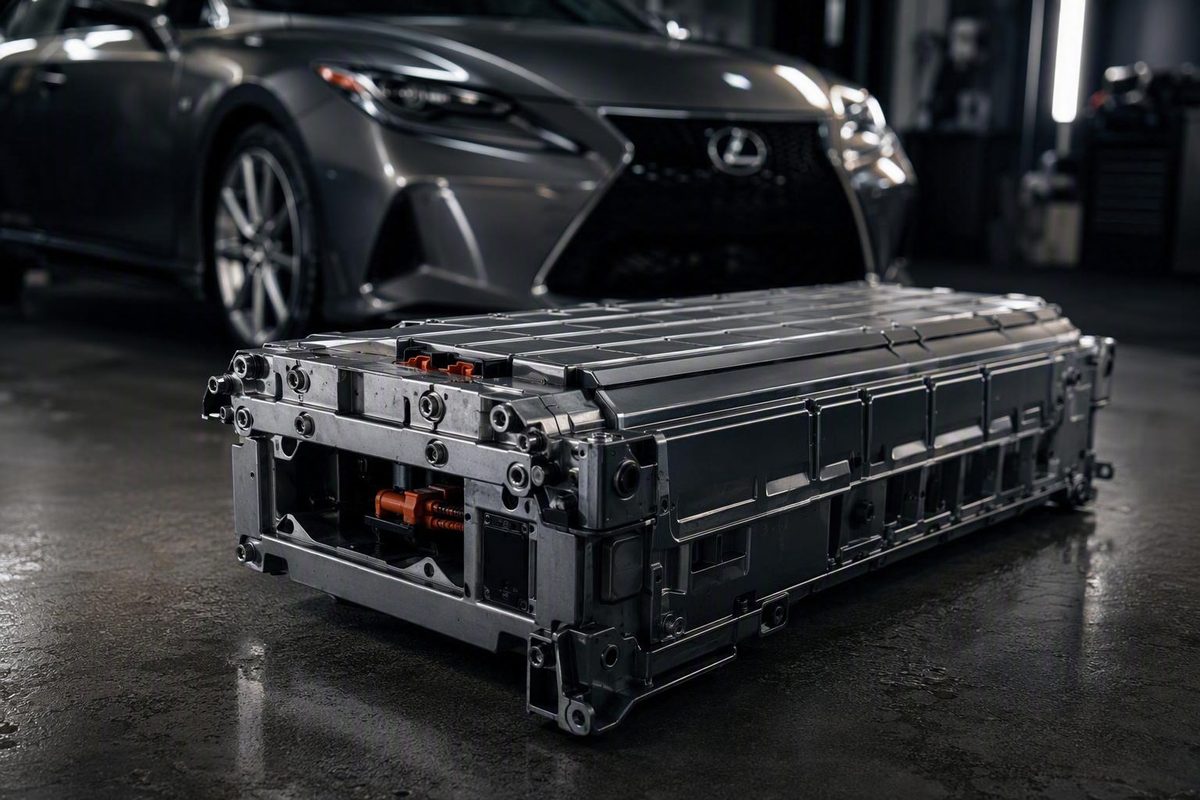
The short answer: replacement can cost thousands, but the scope matters
This guide concerns the high-voltage traction battery that powers the Lexus hybrid system, not the conventional 12-volt battery used for accessories and startup functions.
There is no defensible Lexus-wide replacement price. One aftermarket catalog reviewed for this guide displayed complete-pack prices starting at $1,749 for a CT 200h (Best Hybrid Batteries Lexus catalog).
Another seller displayed LS 600h variants as high as $5,495 before the complete installed scope was known (Greentec Auto Lexus catalog).
Those are seller-specific advertised prices, not guaranteed installed totals. Dealership-authored guides provide broader estimates. Lexus of Cerritos publishes an approximate range of $2,000 to $8,000, depending on the model (Lexus of Cerritos replacement-cost guidance).
Lexus of Concord gives a range of approximately $3,000 to $8,000, depending on the vehicle and replacement option (Lexus of Concord cost guidance).
These figures are not directly comparable. A catalog price may cover only the pack, with diagnosis, labor, taxes, freight, and core handling either excluded or unclear. A service estimate may account for diagnosis, removal, installation, system checks, or recalibration, but a broadly stated dealer range is not an itemized invoice.
The final price can change with:
- Exact Lexus model, model year, generation, drivetrain, and market
- Battery size, architecture, and chemistry
- OEM-new, aftermarket new-cell, remanufactured, refurbished, or used condition
- Pack availability and whether the part is locally stocked
- Labor rates and vehicle-access requirements
- Dealer, independent specialist, mobile installer, or shipped-pack provider
- Diagnostic work required before replacement
- Freight, tax, core-return, and recycling arrangements
- Warranty eligibility and the expenses the warranty actually covers
This guide focuses on conventional Lexus hybrids such as the CT 200h, ES 300h, GS 450h, HS 250h, LS 600h, NX 300h, RX 400h, and RX 450h. Plug-in hybrids such as the NX 450h+ and RX 450h+ use different battery systems. The evaluation principles are similar, but their batteries, service procedures, warranty terms, and costs require separate model-specific research.
Pricing review date: August 21, 2026. Prices, stock status, year coverage, warranty headlines, and service terms were captured from the cited seller pages. They are not quotes and may change. Dollar amounts are reproduced as displayed; one catalog did not clearly identify the currency jurisdiction in the supplied material. Confirm current terms and VIN compatibility before ordering.
Complete-pack price examples by Lexus model and year
The tables below are limited to listings presented as complete traction-battery packs. Rebuild kits, individual modules, plugs, and fuses appear separately because their prices do not represent complete-pack replacement.
The cited sources are seller category pages rather than matched, itemized invoices. Every listing should therefore be treated as an advertised snapshot whose price, stock, compatibility, warranty, and included service can change. Several listings also use conflicting years in titles, labels, or URLs, so written VIN-based confirmation is essential.
Best Hybrid Batteries catalog examples
The following rows come from the seller’s Lexus category page. The catalog does not consistently disclose pack condition, installation, freight, taxes, core charges, or detailed warranty terms (seller catalog and availability snapshot).
| Model and advertised year range | Advertised price | Seller-described condition or cell type | Advertised warranty | Installation status | Important exclusions or unknowns |
|---|---|---|---|---|---|
| CT 200h, 2012–2016 | $1,749 | Not clearly disclosed | Not clearly disclosed for this product | Not disclosed | Title and URL reportedly use conflicting years; diagnosis, labor, tax, freight, and core handling are unclear |
| GS 450h, 2007–2008 | $2,649 | Not clearly disclosed | Not clearly disclosed | Not disclosed | Complete-pack listing, but pack condition and installed scope are unclear |
| GS 450h, 2009–2012 | $2,649 | Not clearly disclosed | Not clearly disclosed | Not disclosed | Overlaps another seller’s 2009–2011 range; products should not be treated as equivalent |
| HS 250h, 2009–2013 | $2,149 | Not clearly disclosed | Not clearly disclosed | Not disclosed | Seller title and URL reportedly conflict on year coverage |
| NX 300h, 2015–2021 | $2,549 | Not clearly disclosed | Not clearly disclosed | Not disclosed | Catalog price is not established as an installed total |
| LS 600h, 2007–2009 | $3,249 | Not clearly disclosed | Not clearly disclosed | Not disclosed | Listed as backordered when reviewed; timing and availability can change |
Greentec Auto catalog examples
The next group comes from Greentec’s Lexus catalog. Some products are explicitly marked shop-install-only, while the installation terms for others are not clear from the category-page summaries (seller catalog, warranty, and installation snapshot).
| Model and advertised year range | Advertised price | Seller-described condition or cell type | Advertised warranty | Installation status | Important exclusions or unknowns |
|---|---|---|---|---|---|
| CT 200h, 2010–2017 | $2,099 | Brand-new cells | 48 months | Not clearly disclosed | Different year range and product description from the $1,749 listing; confirm VIN and total installed cost |
| GS 450h, 2009–2011 | $2,599–$3,099 | Variant-dependent | Not established in the category summary | Not clearly disclosed | Exact variant, condition, and included service must be selected |
| GS 450h, 2013–2018 | $4,999 | Not clearly specified in the summary | 36 months | Shop install only | Ask whether displayed price includes shop labor, diagnosis, and tax |
| HS 250h, 2009–2013 | $2,799 | Not clearly specified in the summary | 36 months | Not clearly disclosed | Confirm condition, freight, labor, and exact year fitment |
| NX 300h, 2015–2019 | $3,999 | Not clearly specified in the summary | 36 months | Shop install only | Different year range and transaction structure from the $2,549 listing |
| RX 400h, 2006–2009 | $1,999 | Remanufactured | 18 months | Not clearly disclosed | Compare testing, hardware, labor, freight, and core terms |
| RX 450h, 2010–2015 | $2,799 | Remanufactured | 18 months | Not clearly disclosed | Some seller wording reportedly alternates between 2010–2014 and 2010–2015 |
| RX 450h, 2016–2022 | $3,999 | Not clearly specified in the summary | 36 months | Shop install only | Ask whether the amount includes diagnosis, installation, and tax |
| LS 600h, 2008–2012 | $3,695–$5,495 | Multiple variants | Variant-dependent | Not clearly disclosed in the summary | Exact variant, condition, installation, freight, and fitment require confirmation |
For the 2012–2015 ES 300h, a model-specific seller page provides a particularly useful same-vendor comparison: $1,699 for a remanufactured pack with an 18-month advertised warranty versus $2,395 for a new-cell pack with a 36-month advertised warranty (Greentec ES 300h listings).
| Model and advertised year range | Advertised price | Seller-described condition or cell type | Advertised warranty | Installation status | Important exclusions or unknowns |
|---|---|---|---|---|---|
| ES 300h, 2012–2015 | $1,699 | Remanufactured | 18 months | Shipping and service options offered; displayed-price inclusions unclear | Core, delivery, labor, tax, and detailed warranty terms require confirmation |
| ES 300h, 2012–2015 | $2,395 | New-generation cells | 36 months | Shipping and service options offered; displayed-price inclusions unclear | Different battery category from the remanufactured option; installed scope remains unclear |
Electron Hybrid Solutions catalog examples
The following complete-pack rows come from a catalog that also sells modules, rebuild kits, plugs, and fuses. Those lower-priced components must not be confused with complete batteries (Electron Hybrid Solutions Lexus catalog).
| Model and advertised year range | Advertised price | Seller-described condition or cell type | Advertised warranty | Installation status | Important exclusions or unknowns |
|---|---|---|---|---|---|
| HS 250h, 2010–2014 | $2,488 | Remanufactured complete battery | Not disclosed in the visible catalog | Not disclosed | Distinct from the seller’s rebuild kit, module, and safety-plug products |
| RX 400h, 2006–2009 | $4,138 | Marketed with new cylindrical cells | Not disclosed in the visible catalog | Not disclosed | Installation, freight, tax, core process, and warranty details are unclear |
| RX 450h, 2010–2015 | $4,138 | Marketed with brand-new cylindrical cells | Not disclosed in the visible catalog | Not disclosed | Different seller and cell description from the $2,799 remanufactured listing |
The range within a single model can be substantial. Visible RX 450h listings for 2010–2015 span $2,799 for a remanufactured pack to $4,138 for a pack marketed with new cylindrical cells, but the sellers, pack descriptions, and transaction terms differ.
The table also shows why a CT 200h price cannot be generalized to an LS 600h. Visible CT listings start below $2,100, while LS variants exceed $5,000 before the complete installed scope is known. Those products differ in model application, pack design, condition, availability, and provider.
Why the advertised battery price is not the final bill
A pack listing answers only one part of the cost question. To compare Lexus hybrid battery replacement quotes fairly, build an installed-cost worksheet and require each provider to mark every line included, excluded, or not disclosed.
| Quote component | What to verify | Status in the quote |
|---|---|---|
| Initial diagnosis | Scan, hybrid-system testing, battery-data analysis, and written findings | Included / Excluded / Not disclosed |
| Traction-battery pack | Exact product, condition, cell type, case, electronics, and hardware | Included / Excluded / Not disclosed |
| Removal labor | Disconnecting and removing the existing pack | Included / Excluded / Not disclosed |
| Installation labor | Installing and connecting the replacement pack | Included / Excluded / Not disclosed |
| System setup or recalibration | Post-installation procedures, checks, and code clearing | Included / Excluded / Not disclosed |
| Taxes | Parts tax, labor tax where applicable, and local fees | Included / Excluded / Not disclosed |
| Outbound freight | Shipping the replacement to a shop or address | Included / Excluded / Not disclosed |
| Residential delivery | Extra charge for delivery to a home | Included / Excluded / Not disclosed |
| Mobile service | Travel or on-site installation charge | Included / Excluded / Not disclosed |
| Core deposit | Temporary charge pending return of the old battery | Included / Excluded / Not disclosed |
| Return freight | Cost of sending the old battery back | Included / Excluded / Not disclosed |
| Disposal or recycling | Responsibility and fee for old-pack handling | Included / Excluded / Not disclosed |
| Warranty-related repeat labor | Removal and installation if the replacement fails under warranty | Included / Excluded / Not disclosed |
The ES 300h terms illustrate how the transaction can change the buyer’s initial cash outlay. For a shipped order, the seller says it adds a refundable $500 core deposit, requires the old battery to be returned within 45 days, and deducts return-shipping costs from the refund. The same page describes continental-U.S. shipping as included but adds a $200 residential-delivery charge. It says no core deposit is required when the old battery is collected during service (Greentec ES shipping and core terms).
A refundable core deposit is not necessarily a final net cost, but the buyer must still provide the money initially. Before ordering, obtain the return address, packaging requirements, carrier arrangements, deadline calculation, and expected refund in writing.
Installation method can change both cost and responsibility:
- Shop installation: Ask whether the shop collects the old pack immediately and whether the displayed amount includes labor.
- Mobile installation: Confirm travel charges, service-area limits, old-pack collection, diagnostic scope, and warranty support.
- Shipped pack: Determine who receives the shipment, preserves the packaging, arranges installation, returns the core, and pays return freight.
- Shop-install-only product: Verify whether the displayed price includes installation or merely requires the work to occur at the seller’s facility.
Do not compare a battery-only catalog price with a dealer or independent-shop installed quote and assume the difference is markup. First make the scopes identical: same VIN, comparable battery category, diagnosis, removal, installation, system checks, taxes, freight, warranty, and old-pack handling.
New, remanufactured, refurbished, and module-level options are not equivalent
Sellers may use “remanufactured,” “reconditioned,” “refurbished,” and “rebuilt” differently. For quote comparison, treat these as separate purchasing categories:
- OEM-new pack: A new complete battery supplied through the vehicle manufacturer’s parts channel. Confirm whether the case, electronics, and ancillary hardware are new or reused.
- Aftermarket new-cell pack: A complete pack assembled with cells the seller describes as new, but not necessarily an OEM Lexus service part.
- Remanufactured pack: Generally a used pack or used components that have been disassembled, tested, matched, repaired, balanced, or otherwise processed. The standard varies by seller.
- Refurbished or reconditioned pack: Often a used pack repaired by replacing failed or weak components. Request the provider’s written definition.
- Used pack: A battery removed from another vehicle and sold with its existing cells and history. Ask about donor age, mileage, storage, testing, and warranty.
- Rebuild kit: Cells or modules intended to rebuild an existing pack rather than a ready-to-install complete assembly.
- Individual module: One module within a larger battery. Replacing it is a localized repair, not the same transaction as replacing the complete pack.
- Safety plug, fuse, or related component: A service component, not a traction-battery pack.
A visible catalog demonstrates the pricing trap: it lists an HS 250h complete remanufactured battery at $2,488, a rebuild kit at $1,988, one remanufactured module at $59.99, and a safety plug or fuse at $65.99 (catalog product-scope examples).
| Product scope | Example advertised price | What it represents | What it does not establish |
|---|---|---|---|
| Individual HS 250h module | $59.99 | One remanufactured battery module | Complete-pack parts or installed replacement cost |
| HS 250h safety plug or fuse | $65.99 | A pack-related service component | A replacement traction battery |
| HS 250h rebuild kit | $1,988 | Components intended for rebuilding | A ready-to-install complete pack or total labor |
| GS 450h rebuild kit | $2,388 | Seller-described remanufactured rebuild kit | Complete-battery installation |
| Complete HS 250h battery | $2,488 | Seller-described remanufactured complete battery | Final installed cost unless expressly stated |
In the reviewed listings, some new-cell products have higher prices and longer advertised warranties than remanufactured alternatives. The ES comparison—18 months for the remanufactured option and 36 months for the new-cell option—illustrates what the buyer receives on paper. It does not establish comparative failure rates or prove that one pack will last twice as long.
Before selecting a battery category, request written answers to these questions:
- Are all cells new, or are some or all previously used?
- Who manufactured the cells, and when?
- Is the case new or reused?
- What tests are performed on the completed pack?
- What measured capacity and balance standards must the pack meet?
- Are bus bars, wiring, sensors, fasteners, and other hardware included?
- Does the warranty have a mileage limit?
- Is it transferable?
- Does it cover diagnosis, freight, removal labor, and repeat installation?
- Who pays if the replacement must be shipped back?
- Are towing, rental transportation, or other consequential expenses excluded?
The evidence does not establish one category as universally best. Vehicle condition, expected ownership period, warranty substance, available repair options, and complete installed cost should drive the decision—not the label alone.
Diagnose the hybrid system before authorizing a full pack
Possible battery-related symptoms include:
- A “Check Hybrid System” message or another hybrid warning
- Declining fuel economy
- Rapid or erratic movement of the battery charge gauge
- More frequent gasoline-engine operation
- Reduced acceleration or electric assistance
- Apparent charge loss
- A rear battery-cooling fan that becomes loud or runs continuously
Temecula Valley Lexus identifies these as possible warning signs but also emphasizes vehicle-specific diagnosis because the appropriate repair depends on the model, battery, parts availability, and diagnostic findings (diagnostic and symptom guidance).
None of these symptoms independently proves that the complete pack has failed. Fuel economy and performance can change for reasons unrelated to the traction battery. A warning message shows that the car has detected a problem; it does not identify the required repair by itself.
An independent repair-shop guide identifies P0A80, P3000, and P0A7F as possible diagnostic leads (hybrid battery diagnostic-code guide). A code should begin the investigation, not end it.
Before comparing replacement batteries, ask for:
- The complete fault-code report, including current, pending, and historical codes
- The technician’s test procedure
- Battery-block or module comparison findings where applicable
- Temperature and cooling-system observations
- Evidence supporting full-pack replacement rather than another repair
- Identification of non-battery faults
- A written explanation connecting the recommended repair to the test results
Treat a generic scanner percentage cautiously. In an NX 300h owner discussion, participants disputed whether one reading represented state of health, state of charge, or another value; the percentage did not establish battery failure (Lexus Owners Club diagnostic discussion). Forum discussion is not authoritative diagnostic evidence, but it illustrates why an unexplained percentage should not be treated as remaining battery life.
Cooling airflow should also be inspected. Dust, pet hair, luggage, trim displacement, or other obstructions around accessible vents and ducts can interfere with airflow. This means checking the accessible cooling path—not opening the high-voltage battery.
High-voltage diagnosis, removal, and installation call for appropriate procedures, equipment, and hybrid-system knowledge. Dealership guidance describes the work as involving diagnostics, safe pack removal, installation, and system recalibration. This article does not provide disassembly instructions. If you order a shipped pack, confirm beforehand that the receiving installer will work on the exact Lexus model and follow the battery supplier’s requirements.
Check Lexus warranty coverage before paying out of pocket
Before approving a multi-thousand-dollar repair, ask Lexus to check the vehicle by VIN and consult the official Warranty and Services Guide applicable to that vehicle.
Lexus of Cerritos reports 10 years or 150,000 miles, whichever comes first, for the hybrid battery on model-year-2020-and-newer vehicles. The same dealership separately describes 8 years or 100,000 miles for specified components including the battery control module, hybrid control module, and inverter with converter (dealership warranty summary).
Those figures are dealership summaries, not an individual coverage decision. Verify:
- VIN
- Exact model, model year, and drivetrain
- Original in-service date
- Current mileage
- Country and jurisdiction of sale and registration
- Applicable emissions certification
- Ownership or transfer terms
- Exclusions stated in the vehicle’s warranty documents
- Service or inspection history if relevant to the program
- Whether the diagnosed condition falls within the applicable coverage
Ask what an approved claim would include. Do not assume that a battery warranty headline establishes coverage for diagnosis, removal, installation, related hardware, transportation, or every other expense.
Another dealership guide cautions that plug-in-hybrid and California emissions-related provisions can vary by model and certification and directs owners back to the vehicle-specific warranty terms. Older vehicles and vehicles sold outside the United States should not be assumed to have the model-year-2020-and-newer terms.
UK owners may encounter references to Hybrid Health Checks and possible coverage extensions. Owner-forum quotations are not proof that a particular vehicle qualifies. Verify current regional terms directly with Lexus using the registration or VIN, age, mileage, and service record.
The practical step is to obtain a written coverage decision before authorizing an out-of-pocket replacement. Do not rely solely on a dealer blog, seller page, or forum summary when determining eligibility.
Lifespan is a planning range, not a replacement schedule
Dealership sources commonly describe Lexus hybrid-battery life in broad ranges around 8–15 years or 100,000–150,000 miles. Lexus of Clearwater, for example, presents approximately 15 years or 150,000 miles as an average rule of thumb and says actual life can vary with driving habits, model, and exposure to extreme temperatures (Lexus of Clearwater lifespan guidance).
Use those figures for planning, not as a mandatory replacement interval. Reaching a particular age or mileage does not prove that a working battery needs replacement, and remaining below the range does not rule out a fault.
Possible influences on service life include:
- Vehicle model and battery architecture
- Cell chemistry
- Calendar age
- Mileage and frequency of use
- Driving conditions and habits
- Climate and exposure to extreme heat or cold
- Internal wear and corrosion
- Battery temperature management
- Cooling-vent and duct condition
- Individual pack history
Some commercial and dealership sources publish examples beyond 150,000 miles. The supplied evidence does not include an independent Lexus failure-rate dataset that would support a reliable probability forecast by model and year. Anecdotes can show what happened to one vehicle, not what owners should expect as a typical outcome.
For routine care, keep accessible battery-cooling vents and ducts clear of dust, pet hair, luggage, and other obstructions. Do not insert tools into high-voltage components or dismantle the pack. Clear airflow is sensible maintenance, but the evidence does not support promising a particular number of additional years.
The better replacement trigger is a combination of documented symptoms, fault data, technician testing, and an evaluation of the repair options—not the odometer or calendar alone.
How to compare quotes and choose a replacement path
A useful quote identifies exactly what is being sold and who assumes each responsibility. Obtain at least two itemized quotes with comparable scopes.
Vehicle and fitment
Confirm in writing:
- VIN-based compatibility
- Exact model, model year, generation, drivetrain, and sales market
- Battery chemistry and pack architecture
- Any production-date or emissions-certification split
- Required connectors, sensors, control hardware, and mounting components
- How the provider resolved any conflicting model-year descriptions
Written VIN confirmation is especially important because several seller listings use inconsistent years between titles, labels, and URLs. A search-result title or URL is not enough to establish fitment.
Battery condition and scope
Identify:
- OEM-new, aftermarket new-cell, remanufactured, refurbished, used, or rebuilt
- Complete pack versus rebuild kit
- Cell manufacturer, origin, and age
- Whether the case and electronics are new or reused
- Testing and balancing process
- Measured acceptance standards
- Included hardware
- Whether the product is locally stocked, shipped from elsewhere, or backordered
Availability can affect downtime and transportation planning. The visible $3,249 LS 600h listing for 2007–2009 vehicles was marked backordered when reviewed, so price alone did not establish when the repair could be completed.
Warranty
Compare:
- Duration in months or years
- Mileage limit
- Proration
- Transferability
- Geographic or installer restrictions
- Required maintenance or inspections
- Labor coverage
- Diagnostic coverage
- Removal and repeat-installation coverage
- Freight responsibility
- Towing or transportation exclusions
- Remedy if the first replacement is unavailable
A warranty headline is not enough. A part-only warranty that leaves the owner responsible for another removal and installation has a different financial effect from one that covers both the pack and repeat labor.
Complete transaction cost
Total:
- Diagnosis
- Battery
- Removal
- Installation
- System checks or recalibration
- Tax
- Outbound freight
- Residential-delivery fee
- Mobile-service fee
- Core deposit
- Return freight
- Packaging
- Disposal or recycling
- Payment timing and refund deadlines
Practical replacement paths
Dealer-installed pack: Ask which battery category is being quoted, whether warranty eligibility was checked, and which diagnostic, labor, and related charges are included. Do not assume the pack is new or that every service is covered unless the quote says so.
Independent hybrid specialist: Ask which battery categories the shop offers, whether it performs its own diagnosis, and who administers the product and labor warranties. Confirm its experience with the exact model rather than relying on general hybrid-service claims.
Shop-install-only product: Certain reviewed GS 450h, NX 300h, and RX 450h listings were explicitly marked shop-install-only. Ask whether the displayed price includes installation or only requires installation at the seller’s facility.
Mobile installation: Confirm travel charges, service area, worksite requirements, diagnostic scope, old-pack collection, and who handles a later warranty claim.
Shipped pack installed by a qualified provider: Determine who receives the shipment, inspects it for damage, preserves the packaging, installs the pack, returns the core, and pays any freight not covered by warranty.
If one quote covers a remanufactured battery-only product and another covers a new installed pack, they are not competing prices for the same transaction.
Use this decision sequence:
- Confirm the fault with a documented diagnosis.
- Request a vehicle-specific warranty check using the VIN and applicable documents.
- Confirm fitment by VIN in writing.
- Compare equivalent battery categories, not just headline prices.
- Compare warranty substance, including labor and freight.
- Total every charge, including tax, installation, delivery, and core handling.
- Document old-pack responsibility, packaging, recycling, and return deadlines.
- Authorize the work only after the complete scope and expected total are clear.
Do not buy a traction battery from a warning light or catalog price alone. Diagnosis, warranty verification, written fitment confirmation, equivalent product comparisons, and a complete fee worksheet turn a vague multi-thousand-dollar concern into a defensible quote for the exact Lexus.
Frequently asked questions
How much does it cost to replace a Lexus hybrid battery?
A dealership-authored estimate places replacement at approximately $3,000 to $8,000, depending on the model and replacement option (Lexus of Concord estimate). Advertised aftermarket pack prices may be lower, but catalog amounts are not automatically installed totals.
Your actual cost depends on the exact Lexus, battery category, diagnosis, labor, tax, freight, core process, and warranty coverage. Request an itemized VIN-specific quote.
Is a remanufactured Lexus hybrid battery worth considering?
It can be considered alongside new-cell, OEM-new, used, and repair options, but the label alone does not establish quality or value. The reviewed ES 300h listings illustrate that a remanufactured product can have a lower upfront price and a shorter advertised warranty than a new-cell option.
Ask how the cells were selected and tested, what measured standards apply, which hardware was replaced, and whether the warranty covers diagnosis, labor, freight, removal, and repeat installation. The available evidence does not establish comparative long-term failure rates.
Does Lexus cover the hybrid battery for 10 years or 150,000 miles?
A third-party battery seller summarizing published Lexus warranty information reports 10 years or 150,000 miles, whichever comes first, for the hybrid battery under the model-year-2020 warranty information and advises owners of older vehicles to consult their actual warranty (Lexus hybrid warranty summary).
That general statement does not determine an individual claim. Check the official Warranty and Services Guide and request a VIN-based decision using the model year, original in-service date, mileage, jurisdiction, certification, ownership terms, and applicable exclusions.
Can one failed module be replaced instead of the complete battery pack?
A technician may identify module-level work as an available repair, but suitability depends on the pack’s overall condition and diagnostic findings. One weak module does not establish that a localized repair will be durable, just as one fault code does not prove that the complete pack requires replacement.
A module, rebuild kit, and complete pack are different repair scopes. Compare the immediate cost, warranty, repeat-labor exposure, pack condition, and the evidence supporting the proposed repair.
What are the warning signs of a failing Lexus hybrid battery?
Possible signs include a Check Hybrid System message, declining fuel economy, erratic charge-gauge movement, more frequent gasoline-engine operation, reduced acceleration, apparent charge loss, and a loud or continuously running rear cooling fan.
None confirms complete-pack failure on its own. Obtain the fault codes and technician’s findings in writing, have the cooling airflow and broader hybrid system inspected, and do not authorize replacement solely from a generic scanner percentage or dashboard warning.