
23 min read ·
What Your Subaru’s Dashboard Light Is Telling You—and What to Do Next
A flashing check-engine light may indicate an active misfire and potential additional damage. The full icon, behavior and symptoms guide the initial response.
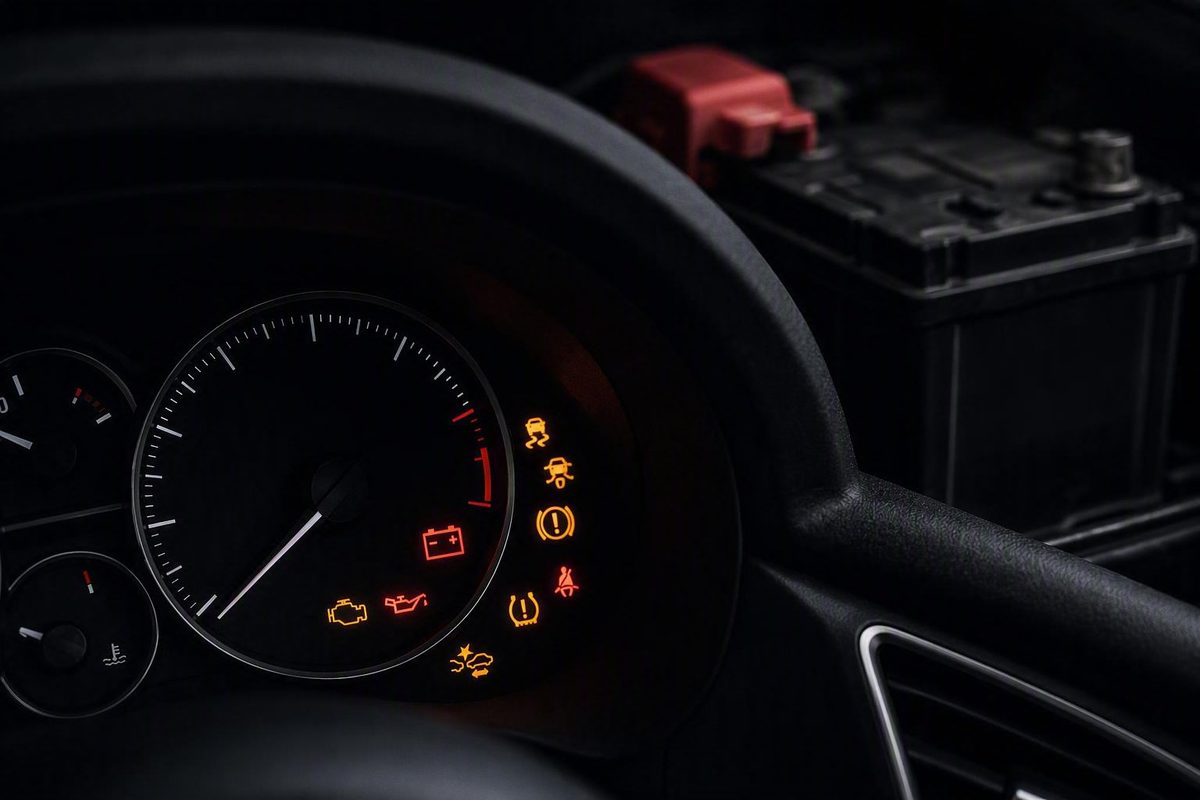
A Subaru dashboard symbol may be a normal feature indicator, a temporary sign that a system is operating, or a warning that something needs attention. To interpret it, identify the complete icon, note whether it is steady or flashing, consider when it appeared, read any accompanying message, and pay attention to how the vehicle feels.
Use this guide to choose an initial response—not to diagnose a failed component. Instrument panels vary by model year, powertrain, transmission, trim, optional equipment, and sales market. The final instruction should come from the owner’s manual for the exact vehicle.
First, Decide Whether to Continue, Check Soon, or Stop Safely
Use these four response levels throughout the guide:
- Continue normally: The light is a recognized status indicator, such as high beams, cruise control, or a selected driving mode, and the vehicle is operating normally.
- Check soon: The warning does not indicate an immediate hazard, but it needs a basic check, diagnostic scan, or service appointment. Examples can include a steady check-engine light, a TPMS warning, or a washer-fluid reminder.
- Stop safely: Reduce speed, avoid sudden maneuvers, and reach a protected location off the road as soon as conditions allow. Shut down the vehicle or follow the warning-specific procedure in its manual.
- Obtain immediate assistance or towing: Use roadside assistance when the warning remains unresolved, the manual says not to drive, or the vehicle cannot be operated safely.
“Stop safely” does not mean braking abruptly in traffic or stopping in an active travel lane. Signal, maintain control, and reach a shoulder, parking area, exit, or other protected location when possible.
Persistent oil-pressure, high coolant-temperature, unresolved brake-system, charging-system, and flashing check-engine warnings generally justify stopping at the earliest safe opportunity. Dealership guidance distinguishes a steady check-engine warning from a flashing one and treats oil pressure, overheating, and an unresolved brake warning as particularly urgent conditions (Subaru of Dayton warning-light guide).
Treat the following symptoms as urgency multipliers regardless of a light’s generalized color category:
- Smoke, steam, or a burning smell
- Severe shaking or repeated misfiring
- Sudden loss of power
- Grinding, knocking, squealing, or other unusual noises
- Rising engine temperature
- Heavy, erratic, or unresponsive steering
- A soft, sinking, unusually hard, or ineffective brake pedal
- Visible fluid leakage
If steering or braking is impaired, concentrate first on controlling the vehicle and reaching safety. Do not let a broad rule such as “yellow means check soon” override unsafe symptoms.
Conversely, not every illuminated symbol means something has failed. A blue high-beam icon confirms a selected lighting function. A flashing traction symbol can mean the stability system is actively managing wheel slip. Several lights may also illuminate briefly when the ignition is switched on as part of a self-check.
Because the same general icon can behave differently among Subaru vehicles, this model-agnostic guide cannot replace the manual for the exact model year, powertrain, equipment package, and market.
How to Read Color, Flashing Behavior, and Startup Timing
Color is a useful first clue, but it is not a verdict:
- Red usually signals greater urgency. It may identify a condition involving lubrication, temperature, charging, braking, or another critical system.
- Yellow or amber usually calls for attention. Depending on the icon and symptoms, that may mean checking something now, arranging service soon, or stopping.
- Green, blue, and sometimes white usually indicate status. These colors commonly confirm that lights, cruise control, a driving mode, or another feature is active.
Colors are not identical across every vehicle. An airbag or other warning may appear in different colors depending on the instrument panel. The complete icon, its behavior, any display message, and the owner’s manual therefore take precedence over broad color rules. AAA’s general guidance likewise describes color as an urgency cue while noting that colors can vary by vehicle (AAA dashboard-light guidance).
Steady versus flashing
A steady light usually reports a continuing status or stored fault. A flashing light draws attention to an active or changing condition, but it does not always mean the same thing.
Consider two contrasting examples:
- Flashing car-with-squiggly-lines symbol: This can mean Vehicle Dynamics Control or traction control is actively intervening because the tires are slipping. Brief flashing on snow, gravel, or a wet road can be normal.
- Flashing engine outline or CHECK ENGINE light: This may indicate an active misfire capable of causing additional damage. Reduce power demand and stop safely, particularly if the engine shakes, loses power, smokes, or sounds abnormal.
Other indicators have their own flashing logic. On certain CVT models, a flashing AWD warning can relate to tire-diameter or inflation differences. A flashing AT OIL TEMP warning after startup may indicate a transmission-control problem. A TPMS light that flashes at startup and then remains on may indicate a monitoring-system fault rather than low pressure alone.
What happens at startup
When the ignition is switched on, numerous lights may illuminate briefly while the vehicle checks warning circuits and control systems. They should generally turn off after the engine starts or after the relevant check finishes.
Investigate a symbol when it:
- Remains on beyond its normal startup check
- Appears unexpectedly while driving
- Begins flashing when it is normally steady
- Fails to illuminate during an expected startup check
- Appears with another warning or display message
- Coincides with a change in steering, braking, engine operation, or temperature
Low voltage can complicate startup checks. A jump-start, battery disconnection, battery replacement, or deeply discharged battery may be associated with temporary warnings. Dealership reference material notes, for example, that insufficient voltage during a jump-start can cause temporary ABS illumination; a warning that persists still requires investigation (Star Subaru warning-light reference).
Do not assume every light after a battery event is harmless. Persistent or recurring warnings may reflect a continuing voltage, connection, charging, or separate system problem.
Critical Subaru Warnings That Can Require a Safe Stop
The following table is an initial-action guide. Exact displays and procedures vary by vehicle.
| Visual description | Typical meaning | Urgency | Immediate action | Important qualifications |
|---|---|---|---|---|
| Red oil can, sometimes with a drop | Inadequate engine-oil pressure and lubrication | Stop safely | Reach safety and shut off the engine | Not merely an oil-change reminder; different from a low-oil-level icon |
| Thermometer over waves or in liquid | Excessive engine-coolant temperature | Stop safely | Shut off the engine and allow it to cool | Never open a hot, pressurized cooling system |
| BRAKE text or exclamation point in a bracketed circle | Parking brake applied or a brake-system condition | Stop safely if unresolved | Confirm the parking brake is fully released and assess braking | Do not continue if the warning persists or braking feels abnormal |
| Battery with plus and minus marks | Charging system is not maintaining electrical power | Stop safely | Reach a safe place and arrange testing or assistance | The icon does not prove the battery itself failed |
| Flashing engine outline or CHECK ENGINE | Possible active misfire or severe engine-management fault | Stop safely | Reduce load, stop, and seek assistance | Shaking, smoke, power loss, or abnormal noise raises urgency |
| AT OIL TEMP | Excessive automatic-transmission or CVT fluid temperature | Stop safely | Follow the model-specific cooling procedure | Flashing after startup may indicate a control-system fault |
| Person with a circle, SRS text, or airbag symbol | Airbag or restraint-system fault | Prompt inspection | Drive only if otherwise safe and arrange inspection | The symbol cannot identify the failed component |
General automotive guidance treats oil-pressure, coolant-temperature, charging, transmission-temperature, and unresolved brake warnings as conditions that can require stopping as soon as safely possible (U.S. News dashboard warning guide).
Oil-pressure warning
An oil can commonly represents oil pressure, not an ordinary maintenance reminder. Low oil level can contribute to low pressure, but pressure can also be lost for other reasons. Continued engine operation without adequate lubrication can damage the engine.
If the oil-pressure light appears while driving:
- Ease off the accelerator.
- Reach a safe location.
- Shut off the engine.
- If conditions permit, check the oil level according to the manual.
- Keep the engine off and obtain qualified assistance if the warning’s cause is uncertain, the engine sounds abnormal, or the manual does not support restarting.
A dipstick measures level, not pressure. Dealership guidance likewise identifies the oil-can warning as a low-pressure condition and advises stopping the engine rather than continuing to drive (Downtown Subaru Nashville warning-light overview).
High coolant-temperature warning
A thermometer-in-liquid symbol indicates overheating or excessive coolant temperature. Stop safely, switch off the engine, and allow it to cool.
Do not remove a radiator cap or open a pressurized cooling system while it is hot. If there is steam, leakage, a coolant odor, or repeated overheating, roadside assistance is more appropriate than attempting to continue.
Brake-system warning
First verify whether the parking brake is engaged. If the BRAKE light or bracketed-circle warning remains after the parking brake is completely released, stop safely.
Do not continue if:
- The pedal is soft, sinking, unusually hard, or ineffective
- Braking pulls the vehicle sharply
- Fluid appears to be leaking
- The ABS warning is also illuminated
- The owner’s manual instructs you not to drive
The circled P electronic parking-brake indicator is related, but it is not the same as the general brake-system warning.
Charging-system warning
The battery-shaped icon concerns the charging system. Possible areas include the alternator, accessory belt, cables, terminals, connections, wiring, or battery. The symbol alone cannot identify which part has failed.
A vehicle with a charging fault may operate temporarily on stored battery power and then lose electrical functions or stall. Reach a safe stopping place and arrange assistance or testing. Do not interpret the icon as proof that purchasing a battery will solve the problem.
Flashing check-engine light
A steady check-engine light means the engine-management system has recorded a fault. Flashing is more urgent because it may represent an active misfire and continued operation may compound the problem.
Reduce load and stop safely. Shaking, reduced power, smoke, overheating, or knocking makes the situation more urgent. Even without obvious symptoms, a flashing light deserves a prompt response rather than an ordinary appointment days later.
AT OIL TEMP
On applicable automatic or CVT models, AT OIL TEMP illuminated while driving can indicate excessive transmission-fluid temperature. Some dealership reference material directs drivers to stop safely and let the engine idle until the light turns off, while flashing after startup may indicate a transmission-control fault (Star Subaru CVT warning guidance).
Do not treat idling as a universal procedure. Follow the exact manual for the vehicle. If the warning remains, returns, or accompanies poor shifting, smoke, odor, or loss of drive, obtain assistance.
SRS or airbag warning
An SRS or airbag light indicates a safety-system fault and cannot be diagnosed from the dashboard. The vehicle may move normally, but part of the supplemental restraint system may not function as intended. Arrange prompt inspection.
Common Caution Lights: Check Engine, ABS, Tires, Steering, and Traction
Yellow and amber warnings cover many conditions. Some may allow cautious short-term driving; others become urgent when paired with symptoms or another warning.
| Icon or wording | Typical meaning | Initial response |
|---|---|---|
| Steady engine outline or CHECK ENGINE | Stored engine-management fault | Check soon; monitor for flashing or poor operation |
| ABS | Anti-lock function may be unavailable | Drive cautiously if braking is otherwise normal; arrange prompt inspection |
Tire outline with ! |
Low tire pressure or TPMS fault | Inspect and measure tire pressure |
Steering wheel with ! |
Electronic power-steering fault | Stop if steering effort changes; otherwise inspect promptly |
| Car with squiggly lines | Traction or stability-system activity, OFF state, or fault | Interpret by flashing behavior, OFF label, and message |
| Windshield with spray | Low washer fluid | Refill when practical |
Steady check-engine light
A steady engine outline or CHECK ENGINE display means the engine-management system has detected and stored a fault. Possibilities range from a loose fuel cap to a more consequential emissions, sensor, ignition, engine, or control-system problem. The light cannot identify the failed part.
If the vehicle runs normally and no critical warning is present:
- Confirm that the fuel cap is installed and tightened correctly.
- Avoid heavy acceleration, towing, and unnecessary high-load driving.
- Arrange diagnostic scanning soon.
- Watch for flashing, overheating, shaking, reduced power, smoke, or abnormal sounds.
Do not assume a steady light is safe to ignore or suitable for a long trip. Poor drivability or another serious warning overrides generic advice about limited driving.
ABS warning
An ABS symbol means anti-lock braking may be unavailable. If it appears by itself, the separate brake warning is off, and the pedal feels normal, conventional braking may remain available.
Increase following distance, avoid abrupt braking, and arrange prompt inspection. Drive only as far as the owner’s manual permits.
ABS plus the general brake-system warning is more serious than ABS alone. On applicable vehicles, simultaneous illumination can indicate a malfunction affecting Electronic Brake Force Distribution. Stop safely rather than assuming conventional braking remains unaffected. The distinction between ABS alone and combined ABS-and-brake warnings is described in this dealership warning-light reference (Green Subaru warning-light chart).
Tire-pressure monitoring system
The TPMS icon generally looks like an exclamation point inside a tire cross-section:
- Steady illumination: Commonly indicates that one or more tires are underinflated.
- Flashes at startup, then remains on: May indicate a monitoring-system or sensor fault.
When safe, inspect all tires for visible damage, bulges, foreign objects, or a visibly low tire. Measure pressure when the tires are cold and use the specification on the driver-door or door-jamb placard. Do not apply a generic pressure range to every Subaru.
Inflation does not repair a puncture. Do not drive on a tire that is visibly damaged, flat, or rapidly losing pressure.
Electronic power-steering warning
A steering-wheel icon, sometimes with an exclamation point, can indicate an electronic power-steering fault.
If steering effort changes suddenly, hold the wheel firmly, avoid abrupt maneuvers, and stop safely. If steering feels normal, follow the manual and arrange prompt inspection rather than dismissing the warning.
Vehicle Dynamics Control or traction-control symbol
The car-with-squiggly-lines symbol can represent Vehicle Dynamics Control, traction control, or stability-system operation:
- Brief flashing: Often means the system is actively reducing wheel slip.
- Persistent illumination: Depending on the vehicle, it may mean the system is switched off, unavailable, or malfunctioning.
- Separate OFF indicator: Usually reports that the feature has been disabled.
A steady light does not universally mean the driver switched the system off. Look for an OFF label, another warning, or a display message. Drive conservatively, particularly in rain, snow, ice, or loose gravel.
Washer-fluid reminder
A windshield-and-spray symbol generally means the washer-fluid level is low. It is not usually a major mechanical warning, but reduced windshield-cleaning ability can affect visibility. Refill with an appropriate fluid when practical.
Subaru-Specific AWD, EyeSight, X-MODE, and Driver-Assist Indicators
Subaru-specific icons depend heavily on the vehicle. A CVT model, manual-transmission model, STI, hybrid, Wilderness trim, or EyeSight-equipped vehicle may display symbols absent from another Subaru. Warning-light indexes identify many entries as CVT-only, STI-only, hybrid, or “if equipped.”
Flashing AWD warning
On some CVT-equipped Subarus, a flashing AWD warning can be associated with:
- Tires of different diameters
- Excessively low tire pressure
- A puncture
- Installation of a temporary spare
- Another AWD-system condition
Continuing to drive with a substantial tire-diameter or inflation mismatch can strain or damage the powertrain. Stop safely and check for a flat or visibly damaged tire. Verify inflation and confirm that all installed tires are the specified matching size.
These checks do not provide a complete diagnosis. Dealership guidance for applicable CVT models connects a flashing AWD warning with mismatched tire diameters or severe underinflation and warns against continued operation (DeVoe Subaru dashboard-symbol guide).
EyeSight warnings
An EyeSight alert may indicate temporary unavailability or a system fault. Camera visibility can be affected by:
- Dirt or snow on the windshield
- Interior or exterior condensation
- Heavy rain or snow
- Glare or direct sunlight
- An obstructed viewing area
Clear only the windshield or sensor area specified in the manual, using the approved method. Do not touch, cover, or clean cameras and sensors indiscriminately.
If the warning persists after visibility improves or repeatedly returns in clear conditions, arrange inspection. Temporary obstruction and a system fault are both possible. Until the system is available again, do not rely on affected driver-assistance functions; continue to steer, brake, monitor traffic, and maintain following distance yourself.
X-MODE and Hill Descent Control
X-MODE indicators can show that a terrain mode is selected rather than that the vehicle has malfunctioned. Depending on the model, the display may distinguish among different terrain settings.
Hill Descent Control may similarly show:
- Selected or standby status
- Active operation, sometimes by flashing
An indicator that appears immediately after the corresponding control is pressed is likely reporting feature status. An unexpected warning, OFF label, or failure message requires model-specific interpretation.
BSD/RCTA and Reverse Automatic Braking
Blind-Spot Detection/Rear Cross-Traffic Alert and Reverse Automatic Braking displays are equipment-dependent. Their indicators may report that a feature is:
- Operating
- Switched off
- Temporarily unavailable
- Malfunctioning
Pay attention to text such as OFF, RAB, BSD/RCTA, or CHECK SYSTEM. An OFF indicator and a malfunction warning are not necessarily the same. If the feature is unavailable, use direct observation and ordinary reversing precautions rather than relying on an alert or automatic intervention.
Access-key and push-button-start warnings
A key-shaped symbol, access-key warning, flashing start-button light, or chime may relate to:
- A key fob that is not detected
- A weak fob battery
- A key outside the vehicle
- A steering lock that has not released
- A keyless-access or starting-system condition
Use the manual’s approved key-detection or backup-start procedure. Do not decide from the icon alone that the fob battery is definitely the cause.
SI-DRIVE and STI differential-control indicators
SI-DRIVE symbols can identify Intelligent, Sport, or Sport Sharp modes. STI differential-control indicators can identify a selected differential setting. These commonly report driver-selected modes rather than faults.
Context matters: a mode letter or graphic that changes when a control is operated differs from an icon accompanied by flashing, a chime, or a malfunction message.
Normal Status Lights and Feature Indicators
Green, blue, white, and some mode-specific indicators often communicate normal operation. Identify the complete symbol before dismissing it.
Common examples include:
- Blue headlamp with horizontal beams: High beams or the headlight flasher are operating.
- Green speedometer or cruise symbol: Cruise control is on, ready, or active, depending on the display.
- Green arrows: A turn signal is operating; both may flash with the hazard lights.
- Green fog-lamp symbol: Front fog lights are on.
- Green headlamp symbol: Exterior lighting is active.
- X-MODE graphic: A terrain mode is selected.
- SI-DRIVE letter or graphic: A driving mode is selected.
Auto Start Stop indicators
On equipped vehicles, a green Auto Start Stop symbol generally means the engine has been temporarily stopped by the system. Similar icons may communicate different states:
- Steady Auto Start Stop OFF: The system was disabled with its OFF control.
- Crossed-out or no-activity indicator: Conditions for an automatic stop are not met.
- Flashing yellow warning: A possible system malfunction.
- Yellow indication under a specified condition: May relate to another condition identified in the vehicle’s manual.
Look specifically for color, a slash or cross, the word OFF, and whether the icon flashes.
Auto Vehicle Hold
Auto Vehicle Hold indicators distinguish between the feature being enabled and actively holding the vehicle after a stop. Auto Vehicle Hold is not a parking brake.
On applicable vehicles, the feature may release or transition to the electronic parking brake under specified conditions, including an ignition change, an unfastened driver’s seat belt, a steep slope, an extended hold, or a malfunction. Use the parking brake and transmission position required by the owner’s manual when parking.
Condition and security indicators
Some lights report a condition rather than a mechanical failure:
- Door or hood ajar
- Seat belt unfastened
- Passenger-airbag ON or OFF
- Security or immobilizer status
- Key detected or not detected
These can become warnings when their behavior is abnormal. For example, a seat-belt warning that continues after occupied seats are properly buckled may require investigation. A security light flashing while a locked vehicle is parked may be normal, while an unexpected warning during driving needs interpretation.
The key distinction is among feature active, feature off, temporarily unavailable, and malfunction. Similar outlines may be modified by color, text, a slash, an exclamation point, or flashing behavior.
Commonly Confused Symbols and Warning-Light Combinations
An exclamation point by itself does not identify a system. Read the complete outline around it.
| Symbol or combination | Common interpretation | How to distinguish it |
|---|---|---|
| Oil can | Oil-pressure warning | Usually a plain oil can, sometimes with a drop |
| Oil can over a wavy line | Low engine-oil level | The wavy line is the key distinction; designs vary |
| Battery shape | Charging-system warning | Plus and minus marks may appear inside |
BRAKE or (!) |
General brake-system warning | May also illuminate when the parking brake is engaged |
Circled P |
Electronic parking brake | The letter P distinguishes it |
(!) inside a tire outline |
TPMS | The outer shape resembles a tire cross-section |
| Exclamation point with steering wheel | Power-steering warning | The steering-wheel outline identifies the system |
| Exclamation point with headlamp | Lighting-system warning | The headlamp outline identifies the affected area |
| ABS alone | Anti-lock function may be unavailable | Conventional braking may remain if no brake warning is present |
| ABS plus brake warning | More serious brake-control condition | Can involve Electronic Brake Force Distribution |
Oil pressure versus low oil level
A plain oil can commonly signals low oil pressure, which requires an urgent response. An oil can with a wavy line may indicate that the oil level has reached a low threshold. Exact designs vary, and the warnings should not be treated as interchangeable.
Checking a dipstick can identify a low level; it cannot confirm normal oil pressure. If the pressure warning is present and the cause is uncertain, keep the engine off and obtain assistance.
Charging warning versus a weak battery
A battery-shaped dashboard warning does not simply mean “replace the battery.” It indicates a charging or electrical-system problem that may involve the alternator, belt, cables, terminals, connections, wiring, or battery.
Testing is needed to distinguish stored-energy, charging, and connection problems.
Brake warning versus electronic parking brake
A general brake warning may display BRAKE or an exclamation point inside a bracketed circle. A circled P normally refers to the electronic parking brake. Both may appear during parking, but a general brake warning that remains after release requires a more cautious response.
ABS alone versus ABS plus BRAKE
With the ABS warning alone, conventional braking may remain while anti-lock assistance is unavailable. When ABS and the general brake warning illuminate together, do not rely on that assumption. The combined warning can indicate a broader brake-control problem.
AWD and tire-related warnings
On certain CVT vehicles, a flashing AWD warning can follow a puncture, severe underinflation, mismatched tire diameters, or temporary-spare use. TPMS illumination or recent tire service may provide useful context, but the combination does not prove that a tire is the only cause.
Check all four tires and the vehicle’s manual. Do not continue merely because the vehicle still moves normally.
Multiple lights after a battery event
After a jump-start, low-voltage incident, battery disconnection, or replacement, several systems may perform checks or temporarily report warnings. Some lights may clear after normal voltage is restored and checks are completed.
Persistent warnings should not be dismissed. Several warnings may share an electrical cause, but dashboard lights alone cannot reliably distinguish a voltage problem, connection issue, or unrelated stored fault.
Restarting the vehicle, clearing a diagnostic code, or watching a light disappear does not establish that the underlying cause has been repaired. A reset does not fix a failed part, poor connection, leak, overheating condition, or misfire.
Safe Preliminary Checks and How to Verify the Exact Symbol
Before acting, collect a useful description:
- Note the complete icon shape, not only its color or exclamation point.
- Record whether it is red, amber, yellow, green, blue, or white.
- Determine whether it is steady, flashing, or intermittent.
- Note whether it appeared at startup or while driving.
- Photograph the panel only while safely parked.
- Record accompanying messages, chimes, and other lights.
- Note recent refueling, tire service, jump-starting, battery work, or temporary-spare installation.
- Observe shaking, smoke, odors, noises, temperature changes, power loss, and changes in steering or braking.
Safe checks when conditions permit
Only after the vehicle is safely parked should you consider these basic checks:
- Confirm that the parking brake is fully released.
- Remove and correctly retighten the fuel cap.
- Inspect the tires for visible damage or a flat.
- Measure cold tire pressures against the driver-door or door-jamb placard.
- Confirm that replacement tires are the specified matching size.
- Replenish washer fluid.
- Clear snow, dirt, or condensation only from EyeSight viewing areas identified in the manual.
- Check engine-oil level according to the manual after the engine is off and conditions are safe.
These checks may identify or correct a condition, but they do not replace diagnosis.
Actions to avoid
- Do not continue running the engine with a persistent oil-pressure warning.
- Do not open a hot radiator cap or pressurized cooling system.
- Do not assume braking is normal if the BRAKE warning remains or the pedal feels abnormal.
- Do not crawl under a vehicle stopped beside traffic.
- Do not touch hot, moving, or electrically energized components.
- Do not assume a battery warning identifies the battery as the failed part.
- Do not erase diagnostic codes before recording them if the information may be needed.
These precautions follow the conservative response supported for oil-pressure, overheating, brake, and charging-system warnings in the approved general and dealership guidance. The exact vehicle manual remains controlling.
If the light persists or returns, diagnostic scanning or inspection may be necessary.
Finding the exact manual entry
Use the printed manual’s index for terms such as warning lights, indicator lights, instrument cluster, or the wording shown on the display. For a digital manual:
- Confirm the exact model and model year.
- Select the correct sales market.
- Match the powertrain and transmission.
- Search for the displayed text or system name.
- Compare the manual illustration with the complete icon.
- Read the instructions for steady, flashing, startup, and combined-warning behavior.
Equipment-specific CVT, STI, hybrid, electric, EyeSight, driver-monitoring, lighting, parking, and optional-system indicators vary. Dealership indexes themselves state that not every icon is listed and direct drivers to the vehicle-specific manual (Green Subaru warning and indicator reference).
Use this compact decision tree:
- Identify the complete symbol.
- Check its color, startup timing, and steady or flashing behavior.
- Look for accompanying warnings and unsafe symptoms.
- Choose the response: continue normally, check soon, stop safely, or obtain assistance.
- Verify the instruction in the exact owner’s manual.
Frequently asked questions
What does an exclamation-point symbol mean on a Subaru dashboard?
It depends on the surrounding shape. An exclamation point is a modifier, not a universal warning:
- Inside a tire outline, it generally identifies TPMS.
- Inside a bracketed circle, it generally relates to the brake system.
- With a steering wheel, it can indicate a power-steering problem.
- With a headlamp, it can indicate a lighting-system fault.
- Inside another outline, it refers to that outlined system.
Check the full icon, color, flashing behavior, and accompanying text. Do not respond to every exclamation point as though it were the same warning.
Can I drive with a steady Subaru check-engine light, and what changes if it flashes?
A steady check-engine light generally calls for diagnosis soon. If the vehicle runs normally, no critical warnings are present, and the manual permits it, limited cautious driving may be reasonable. Check the fuel cap and avoid high-load operation, but do not assume the cap is the cause.
Stop safely if the vehicle shakes, loses power, overheats, smokes, or makes abnormal noises.
A flashing check-engine light is more urgent because it may indicate an active misfire and potential additional damage. Reduce load, stop at the earliest safe opportunity, and seek assistance.
Does the battery-shaped Subaru warning mean the battery itself is bad?
No. The symbol generally means the charging system is not operating as expected. The cause could involve the alternator, belt, wiring, terminals, connections, or battery.
Because the vehicle may be operating on diminishing stored power, reach a safe place and arrange charging-system testing. Replacing the battery without testing the system may leave the original problem unresolved.
Can I drive with the ABS light on if the separate brake warning is off?
Possibly for a limited distance if the separate brake warning is off, the pedal feels normal, no unsafe symptoms are present, and the owner’s manual permits it. Conventional braking may remain available while anti-lock assistance is disabled.
Increase following distance, avoid hard braking, and arrange prompt inspection. Stop safely if the brake warning appears, pedal behavior changes, or braking becomes ineffective. ABS and brake warnings together can indicate a more serious brake-control condition.
Why did several Subaru warning lights appear after a jump-start or battery replacement?
Low voltage, power interruption, and reconnection can cause control systems to run self-checks or temporarily report warnings. Some lights may turn off after voltage stabilizes and the checks finish.
Persistent warnings should not be dismissed. They may indicate a continuing charging, voltage, or connection problem—or a separate fault exposed by the event. Record the lights and messages and arrange testing if they remain or return.
Identify the complete icon, note its color and whether it is steady or flashing, and check for accompanying warnings or unsafe symptoms. Treat oil-pressure, overheating, unresolved brake, charging-system, AT OIL TEMP, and flashing check-engine warnings cautiously. Above all, confirm the model-specific instruction in the exact owner’s manual rather than relying on a universal symbol list.