
3 min read ·
Match the Battery Before Opening a Volkswagen Key
Identify the correct Volkswagen key battery, replace it without damaging the fob, and troubleshoot a remote that still does not work.
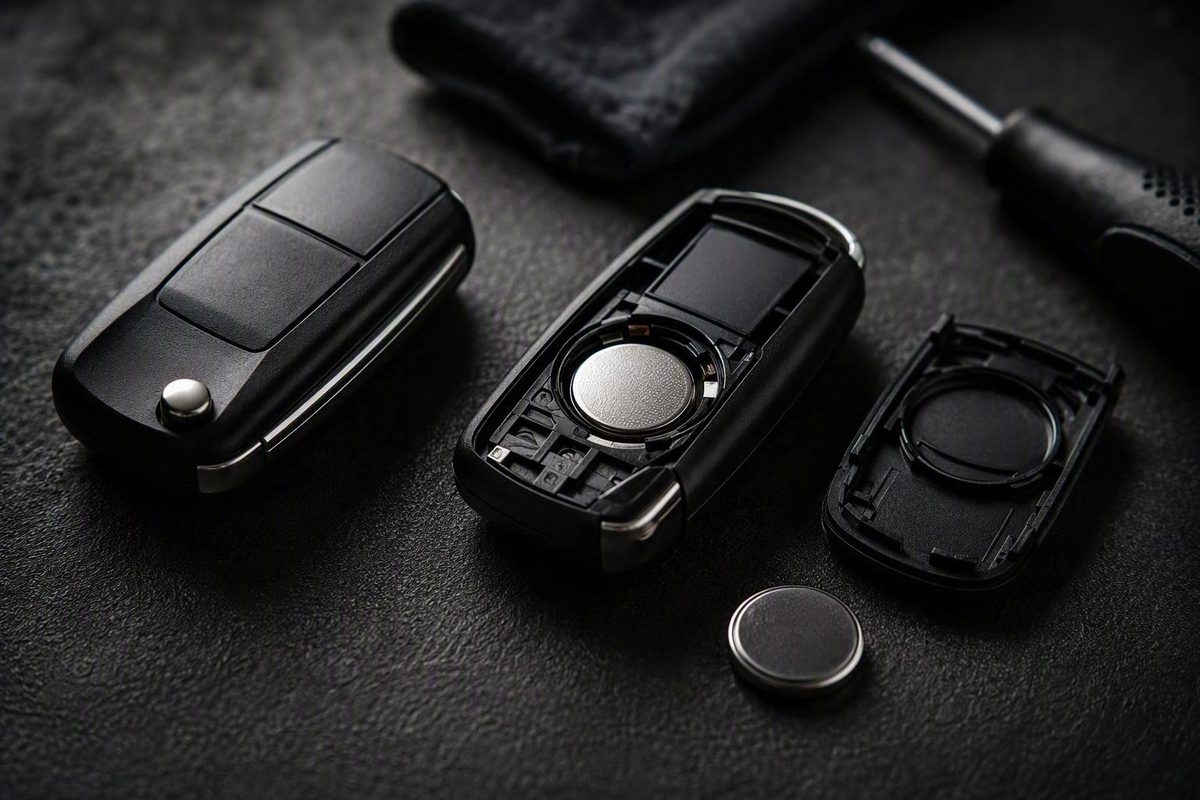
A CR2032 is common in Volkswagen key fobs, while some older key designs may use a CR1632—but neither is a universal answer. Volkswagen has used multiple fob designs, sometimes within the same model line. The dependable check is the code printed on the installed coin cell, supported by the owner’s manual for the exact model year and key design. A Volkswagen dealer guide likewise advises owners to identify the key style and read the existing battery number rather than substitute a similar-looking cell (East Hills Volkswagen).
Identify the battery before buying
Use these checks in order:
- Match the physical key. Determine whether it is a flip key with a folding blade or a proximity fob with a removable emergency key.
- Check the owner’s manual. Look under “vehicle key,” “remote control,” or “replacing the button cell battery.”
- Read the old cell. Its face should show a code such as CR2032 or CR1632. Buy the exact code rather than judging by diameter alone.
- Stop if the evidence conflicts. A model-year listing is less reliable than the cell actually fitted to an original, functioning key. If the fob may have been repaired or replaced, confirm the part with a Volkswagen parts department.
Volkswagen manual material for the 2018–2023 Atlas says a replacement must have the same voltage, size and specification as the drained battery and must face the correct direction (Atlas manual extract). One Volkswagen dealer’s broader fitment guidance says CR2032 is likely in many retractable-key fobs, while CR1632 may appear in older, simpler keys; treat that only as a shopping lead, not confirmation (Heritage Volkswagen).
Replace the coin cell without forcing the case
Work over a clean table so the battery and emergency key cannot fall into a seat rail or drain.
- Release the folding blade or remove the emergency key, as applicable.
- Locate the intended notch, rear cover or case seam. Do not pry under a button or decorative insert.
- Use the emergency key or a small plastic pry tool at that opening. Apply light pressure; if the housing does not separate, stop and verify the procedure for that fob.
- Before lifting the battery, photograph its code and which face is upward.
- Remove the cell without bending its holder or touching the circuit board.
- Fit the exact replacement in the same orientation and check that it lies flat beneath the contacts.
- Align the housing and press around its edge until all clips close. Do not use the remote if the battery cover will not close securely, as the Atlas instructions caution (Atlas manual extract). Keep the removed coin cell and the opened fob away from children.
- Test lock, unlock, trunk and panic buttons, plus Keyless Access if fitted.
For more detail on protecting the clips and preserving battery orientation, see changing the battery in a VW key fob safely.
If the Volkswagen key still does not work
Do not assume immediately that it needs programming. Reopen the fob and check, in order:
- the replacement code exactly matches the old battery;
- polarity matches the photo taken before removal;
- the cell is fully seated and the contacts were not displaced;
- the case is fully clipped together;
- the new cell is not discharged;
- the spare key works normally.
A routine battery change does not automatically require reprogramming. If the correct cell is seated properly but the remote remains unresponsive, the key may need synchronization or diagnosis for damaged contacts, water or impact damage, worn buttons, or an internal fault. If both keys fail in the same way, the vehicle or Keyless Access system also becomes a possibility rather than two simultaneous coin-cell failures (East Hills Volkswagen).
Some Volkswagen manuals provide a model-specific synchronization procedure after battery or communication trouble; follow the manual for the exact vehicle instead of trying generic button combinations. The Atlas procedure, for example, involves the mechanical key and switching on the ignition (Atlas manual extract).