
4 min read ·
Find the Right Battery Group Size Before Buying
Understand BCI, H and LN battery size codes, then verify your vehicle’s fitment, terminals, battery type and ratings before buying.
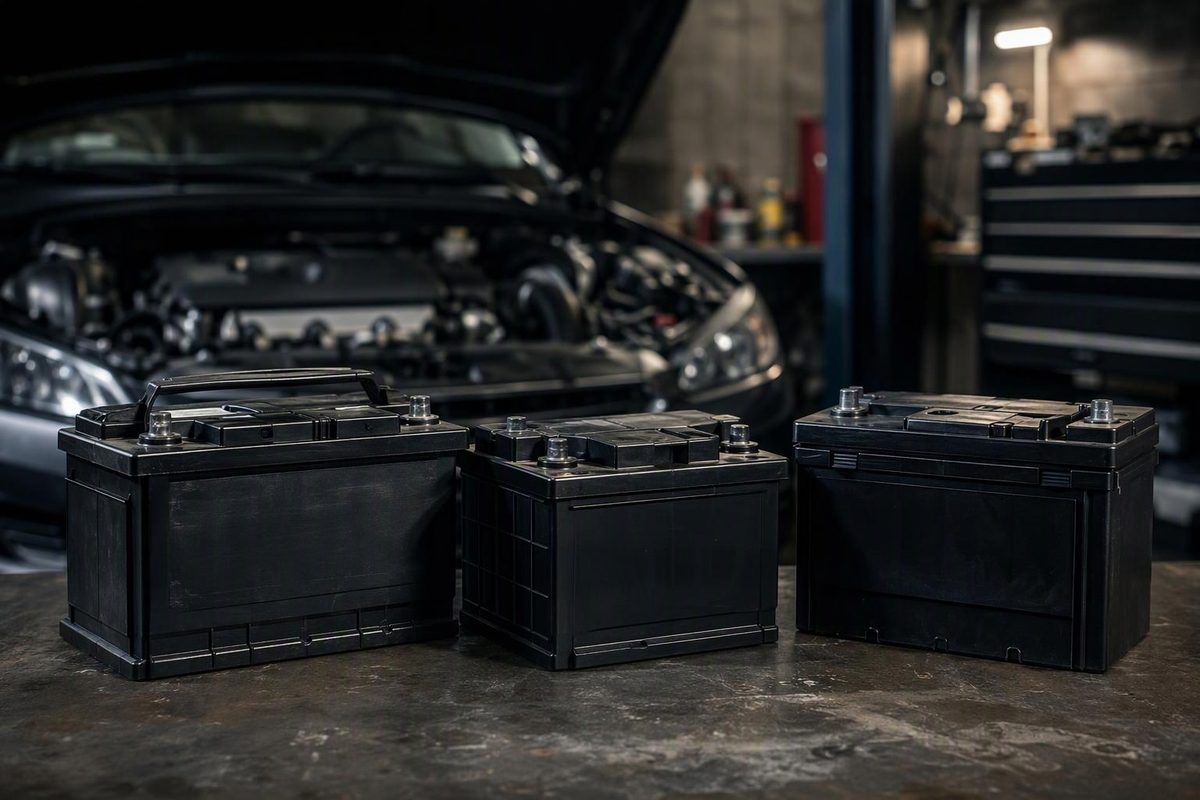
Battery group size is a physical-fit classification—not a power rating. It identifies a battery’s size and terminal arrangement so you can match it to the vehicle’s battery space and cables. A matching group is the starting point; battery technology and electrical ratings still need checking. Clarios explains the fit requirements.
For a replacement, start with the vehicle’s recommended battery specification and a vehicle-specific fitment lookup. Use the installed battery’s label as a cross-check, rather than assuming a previous replacement was correct.
What the numbers and letters mean
In North American listings, BCI means Battery Council International. Its group designations distinguish batteries by maximum overall dimensions, terminal configuration and assembly layout. The numbers are identifiers, not measurements: Group 35 does not mean 35 amp-hours, and a higher group number does not automatically mean a larger or stronger battery. BCI’s tables list dimensions and performance ranges separately. BCI reference tables, hosted by Kit Elec Shop.
Keep the complete code, including any suffix. For example, 51 and 51R have the same listed maximum dimensions but different terminal layouts, as shown in the BCI dimensions and assembly tables. You cannot confirm cable compatibility from case dimensions alone. See the separate Group 51R fit and polarity guide if that is the code on your battery.
Why one battery may have several size names
Listings also use DIN-style H codes and European LN codes. These common cross-references help when a manual and retailer use different names:
| BCI group | H code | LN code |
|---|---|---|
| 47 | H5 | LN2 |
| 48 | H6 | LN3 |
| 94R | H7 | LN4 |
| 49 | H8 | LN5 |
These relationships appear in the BCI/DIN/EN reference chart, which describes cross-references as “best fit” estimates—not universal replacement approvals. Check the actual product’s dimensions, terminals and hold-down details. For a confirmed H7 candidate, use the H7/94R/LN4 dimensions guide.
A label such as 55D23L uses the separate JIS naming system. Do not search for “Group 55” just because the label starts with 55, or transfer an L/R suffix directly between systems. BCI’s JIS reference table treats these as distinct codes and warns that some cross-referenced batteries have different terminal diameters. BCI/JIS reference chart.
How to find the correct group size
1. Identify the exact vehicle and battery
Have the model year, make, model, engine and relevant equipment ready. If the vehicle has more than one battery, establish which one you are replacing before searching.
Check the owner’s manual for battery specifications, then use a manufacturer’s fitment catalogue. Interstate’s battery finder accepts year/make/model, VIN in the U.S. and Canada, or a U.S. license plate. Read any application notes rather than selecting the first result.
2. Record the installed battery’s label
Photograph the complete group code, part number, voltage, technology and ratings. Note which vehicle cable connects to the marked positive terminal.
Clarios recommends checking the old label, using a battery finder or asking the vehicle’s service provider to identify the group. If the label and catalogue disagree, stop and resolve the mismatch with a VIN-based parts check. Group-size identification guidance.
3. Verify physical fit—not just available tray space
Compare the candidate product’s specifications with:
- Length, width and overall height, including terminal clearance.
- Positive and negative terminal locations and connector type.
- Cable reach without stretching or rerouting.
- The original hold-down’s fit to the case or base ledge.
- Any required vent-hose connection.
An undersized battery may not secure properly, while the wrong terminal orientation can prevent cable connection. Venting requirements must also follow the vehicle’s instructions. Clarios fit guidance and venting instructions. If the clamp will not secure the battery or the cables do not reach naturally, do not improvise a fit.
4. Match technology and ratings separately
The group code does not substitute for these checks:
- Voltage: Confirm the replacement matches the vehicle’s specified voltage.
- Technology: Match the vehicle-approved type—such as conventional flooded, enhanced flooded (EFB) or absorbent glass mat (AGM). Do not downgrade an original EFB or AGM requirement. Battery-type guidance.
- CCA: Cold-cranking amps describe cold-starting performance, not case size. Match the vehicle manufacturer’s specification. CCA guidance.
- Ah or reserve capacity: These describe capacity under specified test conditions, not the group’s dimensions. Check any requirement in the vehicle specification. Capacity-rating explanation.
Before buying, confirm the exact battery part number is listed as compatible with your vehicle and meets its specifications—not merely that its group code looks familiar. For an installed quote, ask whether it includes the correct technology, installation, core handling and any required battery registration or reset.