
5 min read ·
Group 65 Battery Dimensions and Fitment Checks
Check Group 65 dimensions, terminal layout, CCA, chemistry and 2026 prices, plus the fit and reset details to verify before replacement.
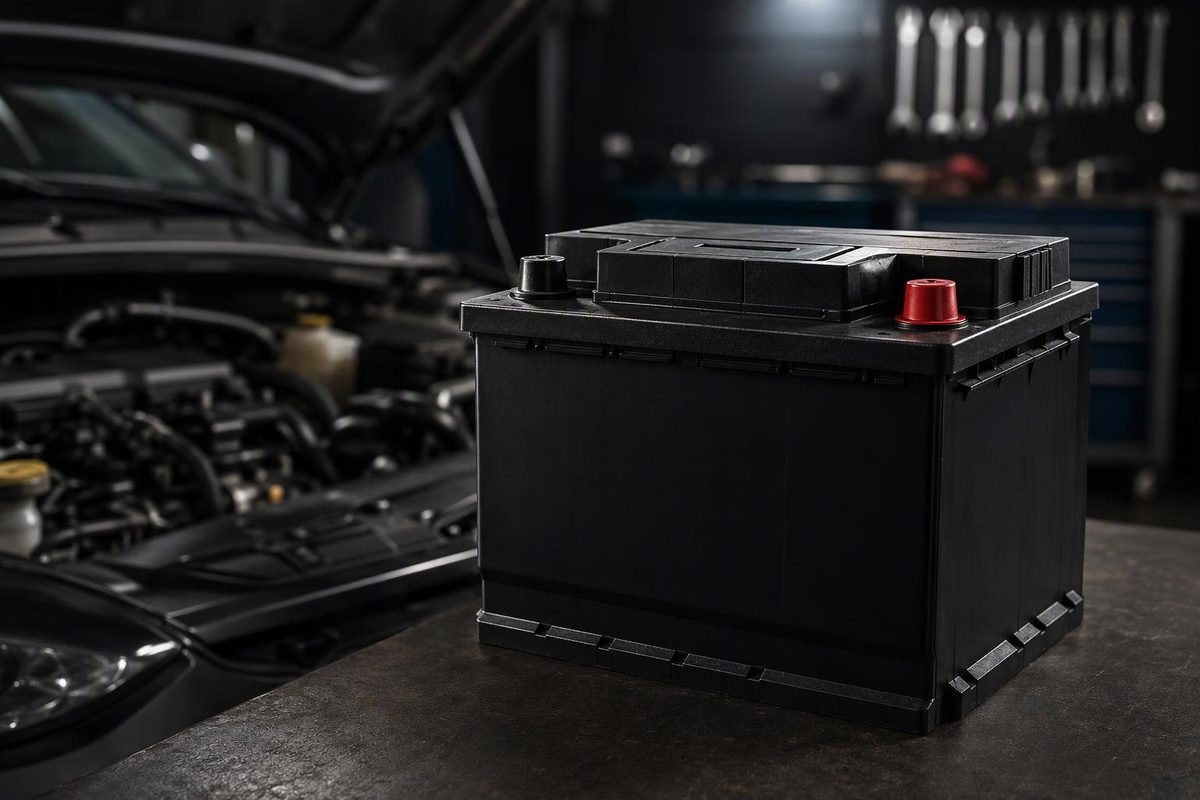
The BCI reference dimensions for a Group 65 battery are 12 1/16 × 7 9/16 × 7 9/16 inches (306 × 192 × 192 mm), measured length × width × overall height. Group 65 is a 12-volt automotive battery format with top posts.
Treat those dimensions as a starting point, not proof of fit. Current products carrying the Group 65 designation differ slightly in size, and the group number does not establish one cold-cranking rating, reserve capacity or battery chemistry.
Group 65 specifications at a glance
| Item | Group 65 reference |
|---|---|
| BCI dimensions | 12 1/16 × 7 9/16 × 7 9/16 in |
| Metric dimensions | 306 × 192 × 192 mm |
| Voltage | 12 volts |
| Terminals | Automotive top posts |
| BCI assembly figure | 21 |
| BCI OE CCA reference range | 540–880 CCA |
| BCI capacity reference | 70 Ah |
| Available construction | Flooded lead-acid and AGM |
| Weight of reviewed examples | About 41.5–49.8 lb |
The dimensions, assembly figure and OE performance references are from the Battery Council International group-size chart. BCI labels the dimensions as maximum overall dimensions, but current manufacturer catalogs show why the exact battery specification still matters.
East Penn’s April 2026 sheet, for example, lists its Group 65 products at 12 × 7 3/8 × 7 5/8 inches (305 × 187 × 194 mm)—slightly taller than the BCI chart value. Its reviewed flooded models range from 675 to 850 CCA and 41.5 to 46.5 pounds; its 9A65 AGM is rated at 750 CCA, 150 minutes of reserve capacity and 47.5 pounds (East Penn specification sheet).
An Odyssey Group 65 AGM is 11.80 × 7.20 × 7.60 inches, weighs 49.8 pounds and is rated at 762 CCA (Odyssey specifications). Measure tight clearances and check the selected product’s data sheet rather than relying on the group-size dimensions alone.
Check these five details before ordering
1. Exact vehicle application
Group 65 is used in numerous Ford trucks and SUVs and in some older Chrysler, Dodge and Ram applications. Interstate’s MTX-65 list, for example, includes selected F-150, F-250, F-350, Explorer and Expedition years as well as selected Dakota, Durango and Ram years (Interstate fitment list).
That does not make Group 65 universal across any model line. Year, engine, equipment and market can change the required battery. Search a current fitment catalog using the complete year, make, model and engine—or the VIN—then compare the result with the battery already installed.
2. Terminal position and cable reach
Reviewed Group 65 examples use SAE automotive top posts. With the terminals closest to you, AutoZone specifies the 65-DL’s positive post at the left and negative post at the right (AutoZone specifications).
Because “left positive” changes meaning when viewed from the other side, place the old and new batteries in the same orientation and compare their molded + and − marks. Stop if either cable would need to be stretched, crossed or routed close to metalwork.
Do not assume a similar-looking Group 66, H7/94R or Group 27 is interchangeable. Dimensions, terminal arrangement and hold-down features differ.
3. Hold-down and clearance
Confirm that the tray, lower ledge or top clamp properly captures the new case. Check clearance above the posts and terminal clamps, particularly beneath a metal hood, brace or battery cover. A battery that fits the tray but cannot be secured is not a correct fit.
The battery-tray fitment guide covers the tray, clamp and clearance checks in more detail.
4. CCA and reserve capacity
Meet or exceed the vehicle manufacturer’s specified cold-cranking amps. Higher CCA can add cold-start margin, but it cannot compensate for the wrong case, polarity or battery construction.
Current examples show the range within Group 65:
- East Penn flooded models: 675, 750 or 850 CCA
- East Penn 9A65 AGM: 750 CCA and 150-minute reserve capacity
- Motorcraft BXT-65-850: 850 CCA (Ford product listing)
Reserve capacity can matter in vehicles with substantial electrical loads, but use the vehicle specification rather than choosing on one headline number. See when higher CCA helps for the tradeoffs.
5. Battery construction and electronic reset
Group 65 describes fitment characteristics, not chemistry. Both flooded and AGM versions are sold. If the vehicle specifies AGM, use an approved AGM replacement; do not downgrade to flooded construction merely because it shares the same group number.
Also check the owner’s manual for a battery-monitor reset or other post-installation procedure. The reset is vehicle-specific, not a Group 65 procedure. Ford’s current Bronco manual, for example, calls for switching the ignition on with the engine off, flashing the high beams five times and pressing the brake pedal three times within 10 seconds; the warning lamp flashes three times after a successful reset (Ford Bronco owner’s manual). Do not apply that sequence to another vehicle unless its own manual specifies it.
Group 65 price examples
These online prices were captured on September 30, 2026. Local price, stock, taxes and installation can differ.
| Battery | Type and rating | Listed price |
|---|---|---|
| EverStart Maxx Group 65 | Flooded, 850 CCA, 150-minute RC | $154.34 |
| Duralast 65-DL | Flooded, 750 CCA, 120-minute RC | $179.99 + $22 refundable core |
| EverStart Platinum WAGM65 | AGM, 775 CCA, 150-minute RC | $189.00 |
| Duralast Platinum 65-AGM | AGM, 750 CCA, 120-minute RC | $259.99 + $22 refundable core |
Sources: EverStart Maxx, EverStart Platinum, Duralast flooded and Duralast AGM.
For an installed quote, ask whether the total includes the battery, core charge or credit, labor, terminal cleaning, electrical-system testing and any required battery-monitor reset.
Replacement stop points
Consult the exact vehicle manual before disconnecting the battery; loss of power can affect stored settings and vehicle systems. For a conventional, accessible installation, switch the vehicle off, disconnect negative before positive, secure the replacement in its hold-down, then reconnect positive before negative. Kia documents that order and warns against touching both terminals with a metal object (Kia guidance).
Use a qualified shop if access requires major component removal, terminals or cables are damaged, the vehicle has two starting batteries, or the specified reset requires diagnostic equipment.