
4 min read ·
Group 35 Car Battery Size, Fitment and Replacement Checks
Group 35 dimensions, terminal layout, CCA range, AGM options, 2026 price examples and the checks to make before replacing a car battery.
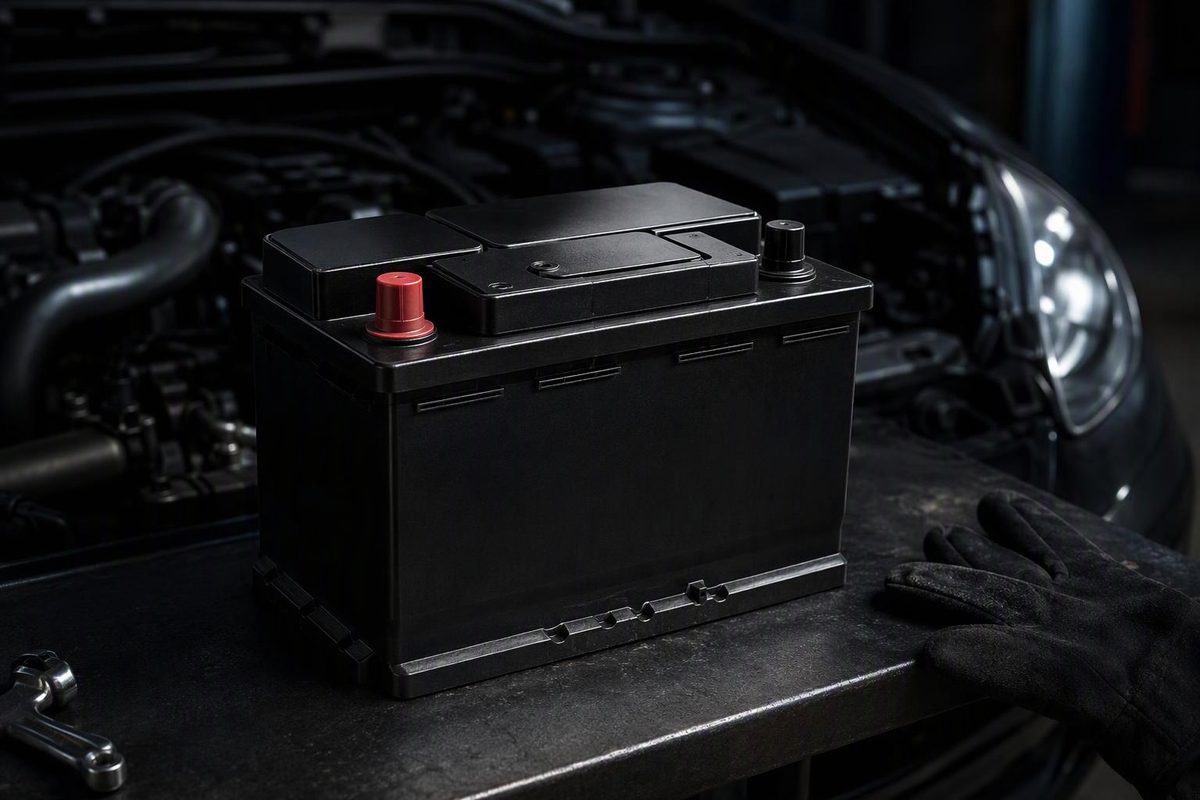
A Group 35 automotive battery is a 12-volt starting-battery size used in selected passenger vehicles. The group number is a useful starting point, but it does not establish fit by itself. Year, engine, trim, start-stop equipment and market specification can change the required battery.
Group 35 specifications
| Specification | BCI Group 35 reference |
|---|---|
| Maximum overall dimensions | 9 1/16 × 6 15/16 × 8 7/8 in. |
| Metric dimensions | 230 × 175 × 225 mm |
| Voltage | 12 V |
| Post/terminal types | A and A2 top posts |
| Terminal arrangement | Figure 11 |
| OE performance range | 300–640 CCA |
| OE capacity range | 48–113 Ah |
These are the Group 35 entries in Battery Council International’s group-size table. BCI classifies batteries by voltage, maximum dimensions, terminal arrangement and other fit-related features, and it maintains a separate vehicle replacement database for application lookup (BCI group-size overview).
Do not treat the table as proof that any product labeled “35” will fit a tight compartment. Published product measurements can differ: Optima lists its RedTop 35 at 7.69 × 6.75 × 9.38 inches in height-width-length order, making its stated length greater than the BCI table’s Group 35 maximum. Optima also directs buyers to verify vehicle fit (Optima RedTop 35 specifications). Check the dimensions and fitment result for the exact battery you intend to buy.
Group 35 does not mean one CCA rating
The group classification narrows dimensions, terminal position and a reference performance range, but it does not give every Group 35 battery the same cold-cranking amps or reserve capacity.
Current product examples show the variation:
- EverStart lists a flooded Group 35N at 640 CCA and 100 minutes of reserve capacity.
- EverStart lists its Group 35 AGM with 120 minutes of reserve capacity.
- Optima rates the RedTop 35 AGM at 720 CCA, 90 minutes of reserve capacity and 44 Ah.
The Optima rating also shows why BCI’s 300–640 CCA figure should be read as an OE reference range, not a hard ceiling on aftermarket products. Compare a replacement with the original battery label and the vehicle manufacturer’s minimum requirements. More CCA may add cold-start margin, but it cannot correct the wrong case, polarity or technology; see when higher CCA helps.
Confirm these six details before purchase
- Exact application: Enter the year, make, model, engine and trim in a current battery catalogue. If catalogues disagree, check by VIN or ask a dealer parts department.
- Case clearance: Compare the proposed battery’s stated length, width and total height—including its posts—with the installed battery and available space. Check the hood, battery cover and nearby metalwork.
- Terminal orientation: Compare the positive and negative post locations with the installed battery. Group 25 has the same maximum BCI envelope as Group 35 but a different terminal-arrangement figure, so it is not an automatic substitute.
- Hold-down: Confirm that the top clamp or lower ledge engages correctly. A battery that sits in the tray but cannot be secured is not a valid fit. See the battery-tray and hold-down checks.
- Battery technology: Match the vehicle’s flooded, enhanced flooded (EFB) or AGM requirement. Varta says a start-stop battery should be replaced by the same type; an EFB can sometimes be upgraded to AGM, while a vehicle equipped for AGM still requires AGM (Varta start-stop guidance).
- Electronic procedure: Check model-specific service information for a battery-monitor reset or registration, steering-angle or window relearns, radio security and memory-loss precautions. Group size does not answer any of these questions.
Stop before purchase if the cables would need to be stretched or crossed, a terminal would sit too close to metalwork, the hold-down cannot engage, or the required battery technology remains uncertain.
What a Group 35 battery costs
In a U.S. retail snapshot on September 28, 2026, Walmart listed a 640-CCA flooded Group 35N at $154.34 and a Group 35 AGM at $189 (flooded listing; AGM listing). Optima listed its RedTop 35 AGM at $279.99 on the same date. Retail prices can vary by location and may exclude tax, a refundable core deposit and installation.
For a general installed-service benchmark—not a Group 35-specific quote—one regional AAA program advertised non-AGM mobile replacement starting at $204.99, including installation, battery and electrical-system testing, and recycling of the old battery (AAA mobile battery service). Ask whether any quote includes the battery, testing, labor, mobile callout, electronic reset, tax, environmental charges and core credit. The core-charge guide explains how the refundable deposit works.
Replacement stop points
Before disconnecting anything, switch the vehicle off, remove the key and follow its service procedure. Wear eye protection and gloves. For a conventional negative-ground vehicle, disconnect negative first, then positive; after the new battery is secured, reconnect positive first, then negative. AAA also warns against allowing a tool to bridge the posts and says the battery should sit flat with its hold-down installed (AAA battery-removal guide).
Do not proceed with a battery that is cracked, bulging, frozen or leaking. Stop as well if access requires work beyond your tools or service information, or if you cannot confirm the vehicle’s memory, registration or reset procedure. A Group 35 label is only the first fitment check—not permission to improvise the installation.